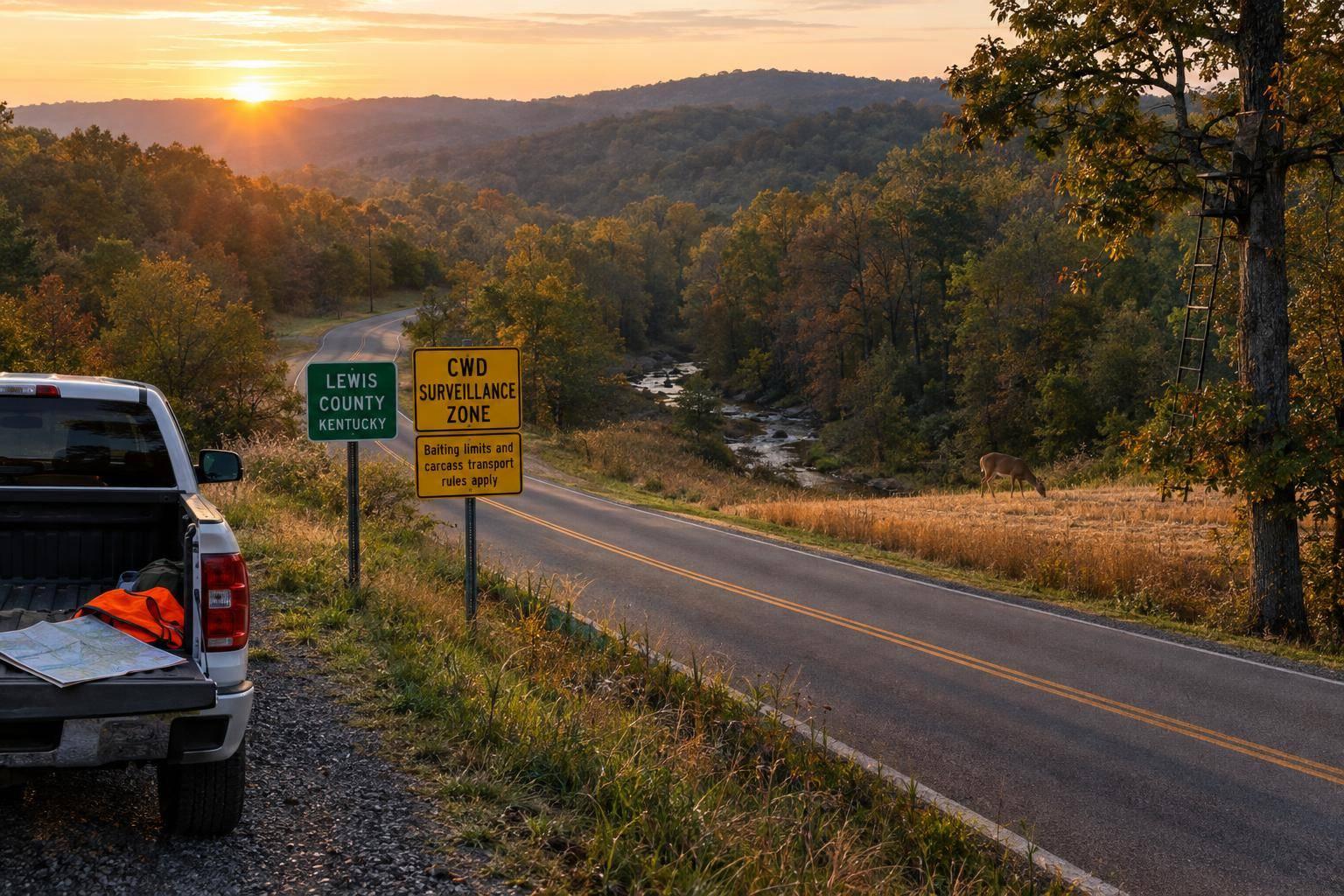
Kentucky deer rules are simple on one point and easy to miss on the other: you get 1 antlered deer statewide per license year, but antlerless harvest changes by zone, date, and sometimes weapon. If you mix those up, you can make a bad call before you ever leave the stand.
If I were giving you the short version before a hunt, it would be this:
- Antlered means an antler shows above the hairline
- Antlerless means no antler shows above the hairline
- Button bucks and shed bucks can count as antlerless
- 1 buck = your full antlered limit for the year
- Antlerless limits change by Zone 1, 2, 3, or 4
- Zones 1 and 2 usually give you more doe room
- Zones 3 and 4 are tighter and often tied to dates and method
- Telecheck and carcass-tag rules still apply on every deer
That split affects more than the tag. It affects your shot discipline, stand choice, travel dates, and whether your trip is buck-focused, meat-focused, or both. Good planning matters in free-range hunting. Wind, pressure, food sources, bedding cover, and rut timing already give you enough to manage. You do not want tag rules adding trouble.
State of the Kentucky Deer Herd
Quick Comparison
| Rule | Antlered Deer | Antlerless Deer |
|---|---|---|
| How Kentucky counts it | Antler visible above hairline | No antler visible above hairline |
| Yearly limit | 1 statewide | Depends on zone and season dates |
| Zone impact | Same in all zones | Changes by Zone 1 to Zone 4 |
| Method/date impact | Less of the issue here | Often a big issue, mainly in Zones 3 and 4 |
| Common mistake | Taking a second buck in another zone | Taking a doe outside the legal window |
Before you hunt, I’d check the current Kentucky Department of Fish and Wildlife Resources guide for the exact rule in your zone and dates, and if you’re booking with Whitetail Hunting Kentucky, I’d match the hunt package to your weapon, season, and tag plan before the trip.
Introduction
In Kentucky, deer fall into two classes: antlered and antlerless. That split matters because it controls what you can take, how the deer is counted, and what stays open for you the rest of the license year.
Kentucky allows one antlered deer per hunter per license year, no matter the zone or weapon. Antlerless limits are different. They change by deer zone and by date, so where you hunt and when you hunt can change what you’re allowed to tag. That’s the part that moves from one zone to the next.
What Kentucky Counts as Antlered vs Antlerless
Kentucky classifies a deer based on whether an antler is visible above the hairline. If no antler shows above the hairline, the deer is counted as antlerless, even if it’s a male.
That means antlerless deer include:
- does
- button bucks
- shed-antler bucks
A button buck counts as antlerless if no antler is visible above the hairline. That call matters before the deer is checked in, because it decides which limit the harvest goes against.
Why the Difference Matters Before You Tag a Deer
When you use Telecheck, an antlered deer goes against your one-buck limit. An antlerless deer goes against the zone limit where you’re hunting. That’s why you need to identify the deer before you shoot, not after.
The next section compares those limits across Kentucky’s four deer zones.
How Antlered and Antlerless Limits Compare Across Kentucky’s Four Deer Zones
Once you split deer into antlered and antlerless, the next thing that matters is the zone you plan to hunt. That’s where Kentucky changes the rules the most. The one-buck statewide limit stays the same, but antlerless opportunity shifts quite a bit from one zone to the next.
Zones 1 and 2: More Antlerless Opportunity, Same One-Buck Rule
If you’re looking at Zone 1 or Zone 2, you generally have more room on antlerless deer. Zone 1 is the most open. Zone 2 still gives you decent antlerless opportunity, with multiple deer allowed up to that zone’s season total.
That matters if you’re trying to line up a hunt around food sources, doe traffic, and rut timing. In these zones, you usually have more flexibility if the right antlerless shot shows up.
Zones 3 and 4: Tighter Antlerless Rules by Method and Date
Zone 3 and Zone 4 are a different deal. Antlerless harvest is tied more closely to method and date windows, so what’s open can change depending on whether you’re hunting archery, gun, or muzzleloader.
If you’re planning ultimate whitetail hunts in Zone 3 or 4, don’t assume one part of the season works like the next. Check the current KDFWR guide before you lock in travel dates, especially around gun and muzzleloader seasons. That’s just good planning. A date that looks fine on the calendar can still put you in a tighter antlerless window than you expected.
Zone Totals and Antlerless Flexibility at a Glance
This chart gives you the plain version of how each zone handles antlerless opportunity.
| Zone | Season Total | Antlerless Limit | Statewide Antlered Limit |
|---|---|---|---|
| Zone 1 | Most open | Most open | 1 buck max |
| Zone 2 | Somewhat open | Somewhat open – multiple deer allowed up to zone total | 1 buck max |
| Zone 3 | Tight | Tight – method and date specific | 1 buck max |
| Zone 4 | Tightest | Tightest – strict method and date rules | 1 buck max |
Next, see how antlered and antlerless deer count toward your season total.
What Counts Toward Your Season Total in Kentucky
Once you’ve got the zone rules straight, the next piece is simple: know what each deer counts against before you ever climb in a stand.
When Harvesting an Antlered Deer Uses Your Only Antlered-Deer Tag for the Year
Kentucky allows one antlered deer per license year. Tag one buck, and your antlered tag is used up for that season.
That matters if you’re hunting more than one part of the state. A buck taken in one zone still counts statewide. Your antlered-deer tag does not start over when you cross into another zone. If you’re lining up more than one trip, that should shape your shot discipline and stand choice from the start.
How Antlerless Deer Count Within Zone Totals
Antlerless deer are counted inside the zone where you took them, so if you hunt more than one zone, keep those numbers separate. You need to stay inside both that zone’s antlerless limit and its total deer limit.
That’s where hunters can get crossed up. The buck limit is statewide, but antlerless harvest is tied to the zone. If you’re moving around Kentucky, keep close track of where each doe was taken.
Telecheck, Carcass Tags, and Checking Current Rules
Every deer has to be reported through Telecheck, and the required carcass tag needs to be attached right away. Before your hunt, check the current KDFWR guide for any rule changes or added requirements.
That part isn’t busywork. It’s just part of doing things right. Before you set dates, pack gear, or book time off, make sure your weapon choice and hunt dates line up with the zone you’ll be hunting under current Kentucky rules.
How to Plan a Legal Harvest Strategy for a Kentucky Deer Hunt
Match Your Weapon and Dates to the Zone You’re Hunting
Start here: your weapon and your hunt dates have to line up with the zone you’re hunting. That matters most for antlerless deer. In tighter zones, antlerless harvest may only be open on certain dates or with certain methods, so your weapon choice can shape the whole trip.
In plain terms, that means one setup may give you a shot at both a buck and a doe, while another may leave you mostly buck-focused. If you’re trying to plan a legal hunt, don’t treat the season dates like one big block on the calendar. Match the method, the dates, and the zone before you go. Then verify the current season structure, zone rules, license needs, and any CWD or carcass movement rules with the Kentucky Department of Fish and Wildlife Resources before the trip. Rules can change, and that check keeps you out of trouble.
Decide Whether Your Trip Is Buck-Focused, Meat-Focused, or Both
Once your dates are set, get honest about the goal. Are you coming for a buck, meat, or trying to do both? That choice affects patience, shot selection, and how you use your tags.
You have one antlered tag statewide, and antlerless harvest only works where your zone allows it. If your main goal is a mature buck, don’t burn that antlered tag on the first legal deer unless that’s the deer you came for. If filling the freezer matters too, a mixed plan can make sense. That means hunting your buck when the setup is right, while also taking legal antlerless chances if the zone and dates allow it.
That kind of plan helps because free-range hunting doesn’t run on a script. Wind shifts, hunting pressure moves deer, and rut timing doesn’t make every sit equal. A buck-focused hunter may pass more deer. A meat-focused hunter may look harder at legal antlerless windows. A hunter trying to do both needs to stay disciplined and know which tag he’s willing to use when the moment comes.
Review Dates, Pricing, and Hunt Options With Whitetail Hunting Kentucky
After you’ve got a plan, check the current hunt options before you book. Whitetail Hunting Kentucky offers guided hunts in Northeastern Kentucky during archery, crossbow, muzzleloader, and rifle seasons.
Go to the pricing page and review the current dates and package details. Before you lock anything in, confirm what season you’re booking, what weapon fits that hunt, and what’s included. If you’re building your trip around a buck tag, antlerless chance, or both, it’s better to sort that out ahead of time than try to fix it after you arrive.
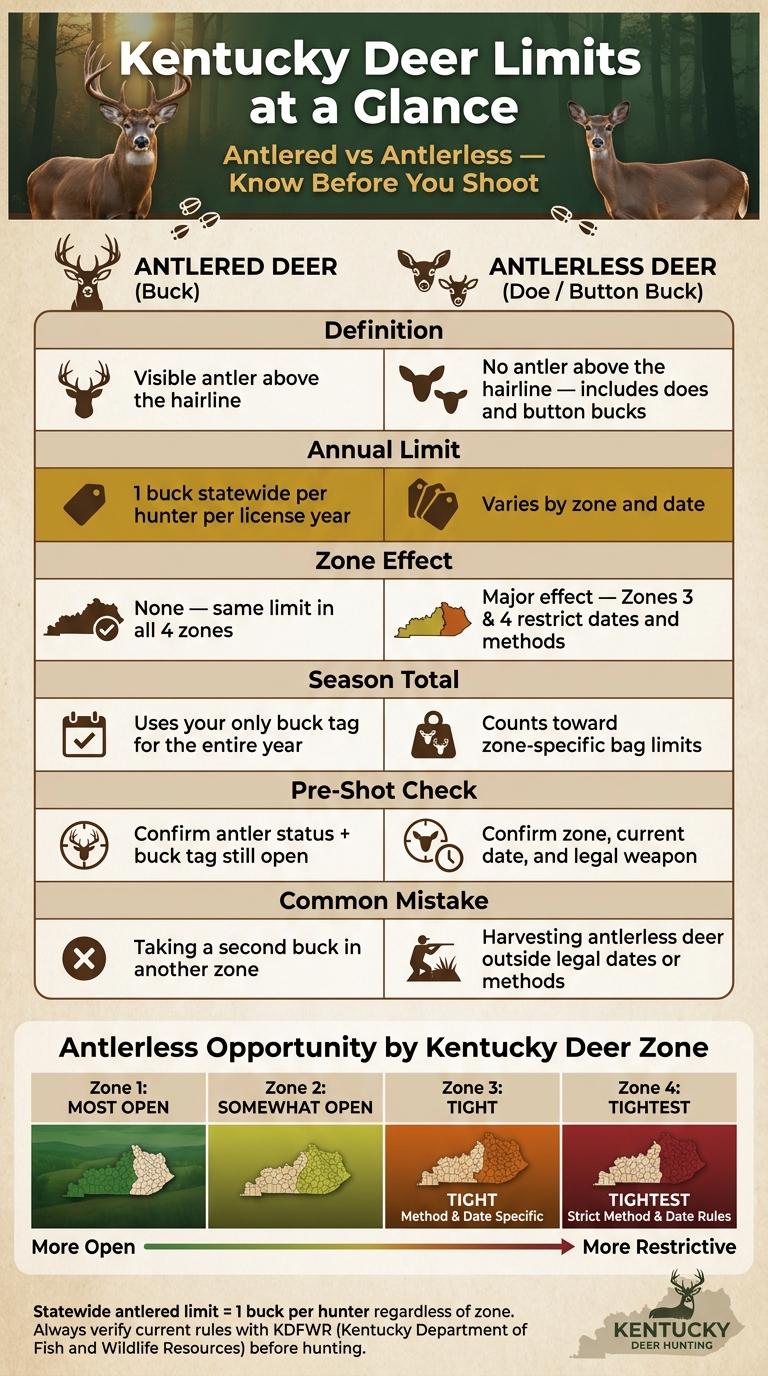
Antlered vs Antlerless Limits: Side-by-Side Summary
Kentucky Deer Hunting: Antlered vs Antlerless Limits by Zone
Antlered vs Antlerless Rules Compared
The main thing to keep straight is simple: you get one buck statewide, no matter which zone you hunt. Antlerless limits are different. Those depend on zone and date, and in some places, your legal method matters too.
That matters in the field. A buck decision is mostly about antler status and whether your buck tag is still open. An antlerless deer takes a little more checking before you shoot, especially in Zones 3 and 4 where dates and methods can tighten up.
Zone and date control antlerless harvest; one buck applies statewide. Here’s the quick side-by-side view.
| Feature | Antlered Deer (Buck) | Antlerless Deer (Doe / Button Buck) |
|---|---|---|
| Definition | Visible antler above the hairline | No antler above the hairline; includes does and button bucks |
| Annual Limit | 1 buck statewide per hunter | Zone and date dependent |
| Zone Effect | None – same limit in all four zones | Big effect – Zones 3 and 4 restrict dates and methods |
| Season Total | Fills your single buck tag for the entire year | Counts toward zone-specific totals and bag limits |
| Pre-Shot Check | Confirm antler status and that your buck tag is still open | Confirm your zone, the current date, and your legal weapon |
| Common Mistake | Second buck in another zone | Antlerless deer taken outside legal dates or methods |
Use this as the quick check before moving to the key takeaways.
Key Takeaways on Antlered vs Antlerless Limits in Kentucky
Plain and simple: Kentucky allows one antlered deer per hunter per license year statewide. Antlerless limits are different. They can change by zone, date, and sometimes the method you’re hunting with.
Zones 1 and 2 usually give you more room on antlerless harvest. Zones 3 and 4 are tighter, with limits tied to certain dates and methods. That’s why your first check in Kentucky ought to be zone, date, and method before you ever touch the trigger. Cross one zone line and what was legal on one farm may not be legal on the next.
Before you book a hunt or head to the stand, check the current Kentucky guide for the exact rules tied to your hunt area, weapon, and dates. If you’re booking with Whitetail Hunting Kentucky, they can help you sort through package details, lodging, and current license and permit requirements.
FAQs
How do I tell if a deer counts as antlered or antlerless?
The search results here do not show Kentucky’s legal standard for calling a deer antlered or antlerless.
If you want to stay on the right side of the rules, check the current Kentucky Department of Fish and Wildlife Resources hunting guide before your hunt. That’s the source to use for the legal definition and the physical traits tied to harvest reporting.
Whitetail Hunting Kentucky can help you plan your hunt around local rules, but for the rule itself, go by the state guide.
Can I take a buck in one Kentucky zone and another in a different zone?
No. Kentucky’s statewide seasonal limit is one antlered deer per hunter per license year, no matter which zone you hunt.
You can move between zones if your plan calls for it, but that does not give you another buck tag in a different area. The buck limit stays the same across the state. What changes by zone is usually the antlerless side of the rules, so check the current Kentucky Department of Fish and Wildlife Resources regulations before your hunt.
How do zone, date, and weapon affect antlerless limits in Kentucky?
In Kentucky, the antlerless limit mostly comes down to the deer zone where you hunt. That zone sets the area’s bag limit, so you need to know your county before you make a plan.
The date matters too. Season timing decides which weapons are legal for antlerless deer on those days. That can change from one part of the season to the next, and zone designations can change as well, so check the current annual regulations with the Kentucky Department of Fish and Wildlife Resources before you plan your harvest.