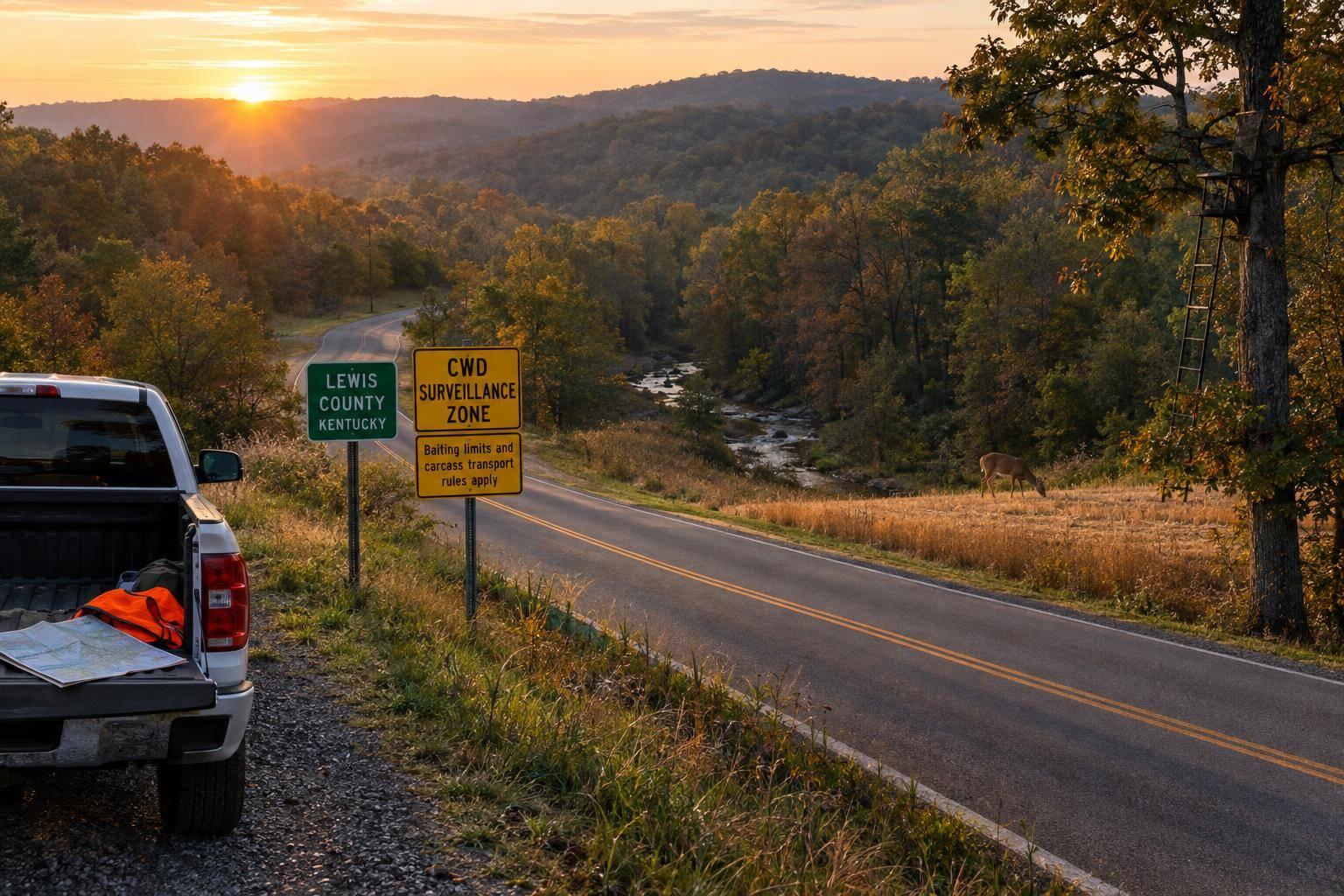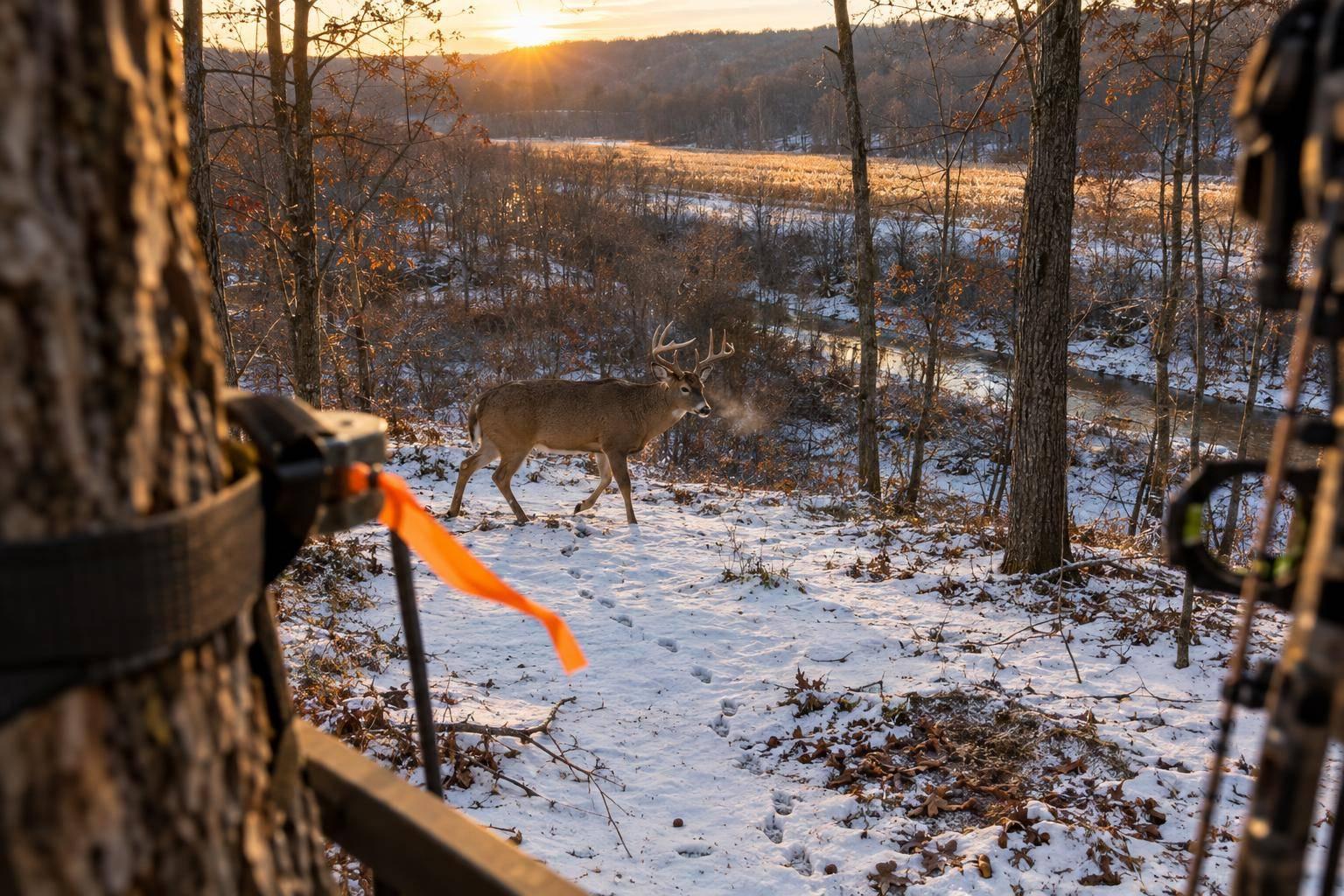
Bow hunting whitetail deer in Kentucky requires preparation, precision, and smart strategies. The state’s diverse terrain, from hardwood forests to open fields, presents unique challenges. Here’s what you need to know to improve your success this season:
- Choose the Right Gear: Use a bow with enough draw weight for clean kills. Opt for carbon arrows and adjustable sights to handle varying distances and conditions. A rangefinder is essential for judging distances in rugged terrain.
- Master Shot Placement: Aim for the heart and lungs for humane kills. Learn the best angles for broadside, quartering-away, and quartering-toward shots while avoiding risky ones like head or full frontal shots.
- Understand Deer Patterns: Track deer behavior by season and weather. Early season focuses on feeding patterns, while the rut requires targeting bedding and breeding areas. Adjust for weather changes and avoid overhunted spots.
- Position Tree Stands Wisely: Set up stands downwind of deer activity to manage scent. Use multiple stands for flexibility and ensure safety when setting them high for better visibility.
- Stay Legal and Prepared: Secure your hunting license and deer permits before the season starts. Ensure your gear meets Kentucky’s regulations.
Quick Tip:
Kentucky’s archery season runs from September 6, 2025, to January 19, 2026, offering plenty of time to practice and refine these techniques. Focus on preparation, shot accuracy, and understanding deer behavior to make the most of your hunt.
10 Whitetail Bowhunting Tips You Can’t Miss!
1. Select the Right Bow and Equipment for Kentucky Hunting
When it comes to hunting in Kentucky, the state’s diverse landscapes – ranging from dense hardwood forests to open fields – demand a balanced approach to your bow and gear. You’ll need equipment that delivers both power and precision, while also being easy to handle in tight spaces or during long-range shots.
For compound bows, focus on selecting a draw weight that ensures enough kinetic energy for a clean, ethical kill. While Kentucky regulations set minimum draw weight standards for hunting whitetail deer, experienced hunters often opt for weights well above the minimum to guarantee proper arrow penetration. This extra power can make all the difference in challenging conditions.
Arrow choice is just as important. Carbon arrows are a popular pick due to their speed and penetration capabilities, especially when paired with reliable broadheads. These features are critical for maintaining accuracy and effectiveness, particularly when dealing with wind or elevation changes during elevated stand hunts.
Given the variety of shooting distances you might encounter – from close-range shots in thick woods to longer shots in open areas – adjustable sights are a must. A multi-pin sight allows you to quickly adapt to changing ranges, making it easier to handle Kentucky’s unpredictable terrain.
Cold weather can make handling your gear tricky, especially if you’re wearing gloves. That’s why many hunters prefer wrist-strap release aids with larger triggers, which are easier to use in freezing conditions compared to handheld releases.
Temperature swings throughout the season can also affect your bow’s performance. String tension and arrow flight can shift with fluctuating weather, so investing in durable, high-quality equipment that stays consistent under different conditions is a smart move.
Finally, don’t overlook the value of a rangefinder. Kentucky’s rugged, uneven terrain and the use of elevated stands can make judging distances a real challenge. A dependable rangefinder ensures accurate shot placement, helping you make the most of every opportunity in the field.
2. Learn Proper Shot Placement for Clean Kills
Understanding deer anatomy is crucial for successful and ethical hunting in Kentucky’s diverse terrain. To ensure a quick, humane kill, focus on the heart and lungs located between the shoulder blade and the last rib. These vital organs provide the best target for effective results. Additionally, adapting your shot placement to different angles is key to achieving clean kills.
The broadside shot is a favorite among bow hunters for good reason. When the deer is standing perpendicular to you, aim 4 to 5 inches behind the shoulder crease to hit the lungs. This placement offers a forgiving margin for error compared to other angles. To improve your chances, aim mid-body and slightly lower your sight to account for potential string jump. Avoid aiming directly at the shoulder blade – it’s a tough target with little room for error. Instead, visualize the "Golden Triangle" on the chest, formed by the tip of the elbow and the two sections of the scapula. This triangle increases your likelihood of hitting both lungs.
Quartering-away shots are another excellent option, particularly for experienced hunters. For this angle, aim a few inches farther back and target the opposite shoulder. This creates an optimal wound channel. However, if the angle forces you to aim directly at the liver to reach the far lung, it’s too extreme – wait for a better opportunity.
For quartering-toward shots, aim at the front of the near shoulder, ensuring your arrow avoids the shoulder blade. This shot is more challenging and should only be taken at slight angles to avoid unnecessary risks.
Some shots should be avoided entirely. Stay away from Texas Heart, full frontal, and head shots, as they carry high risks and minimal chances of success. Similarly, when hunting from an elevated treestand, adjust your aim to ensure your arrow penetrates the vital organs effectively.
Here’s a quick reference table for common shot angles:
| Shot Angle | Aim Point | Success Rate | Notes |
|---|---|---|---|
| Broadside | 4-5 inches back from shoulder crease, halfway down body | Highest | Offers the best margin for error |
| Quartering Away | Opposite-side shoulder, slightly back | High | Creates an excellent wound channel |
| Quartering Toward | Front of near shoulder (slight angles only) | Moderate | Risk of hitting the shoulder blade |
When preparing for a shot, practice visualizing the ideal exit wound and trace back the arrow’s path to determine the best entry point. If everything lines up, take the shot. If not, it’s better to wait than to risk a poor hit. Mastering these shot placements ensures you make the most of your equipment and adapt effectively to changing field conditions.
3. Study Whitetail Deer Patterns During Kentucky Hunting Seasons
To make the most of your bow hunting experience in Kentucky, it’s crucial to understand how deer behavior changes throughout the hunting season. Their movements are influenced by weather, food availability, and the breeding cycle, so adjusting your approach based on these factors can make all the difference.
In the early season, deer tend to stick to predictable routines. They move between bedding areas and feeding spots, making it easier to track their activity. Keep an eye out for signs like scrapes and rubs along commonly used travel paths – these clues can point you toward areas where bucks are likely to be active.
As the season progresses, things get a bit more unpredictable. During the pre-rut, bucks expand their range, and once the peak rut hits, their behavior becomes harder to predict as they focus on chasing does. This is the time to focus on bedding and breeding areas, where you’re more likely to encounter active deer.
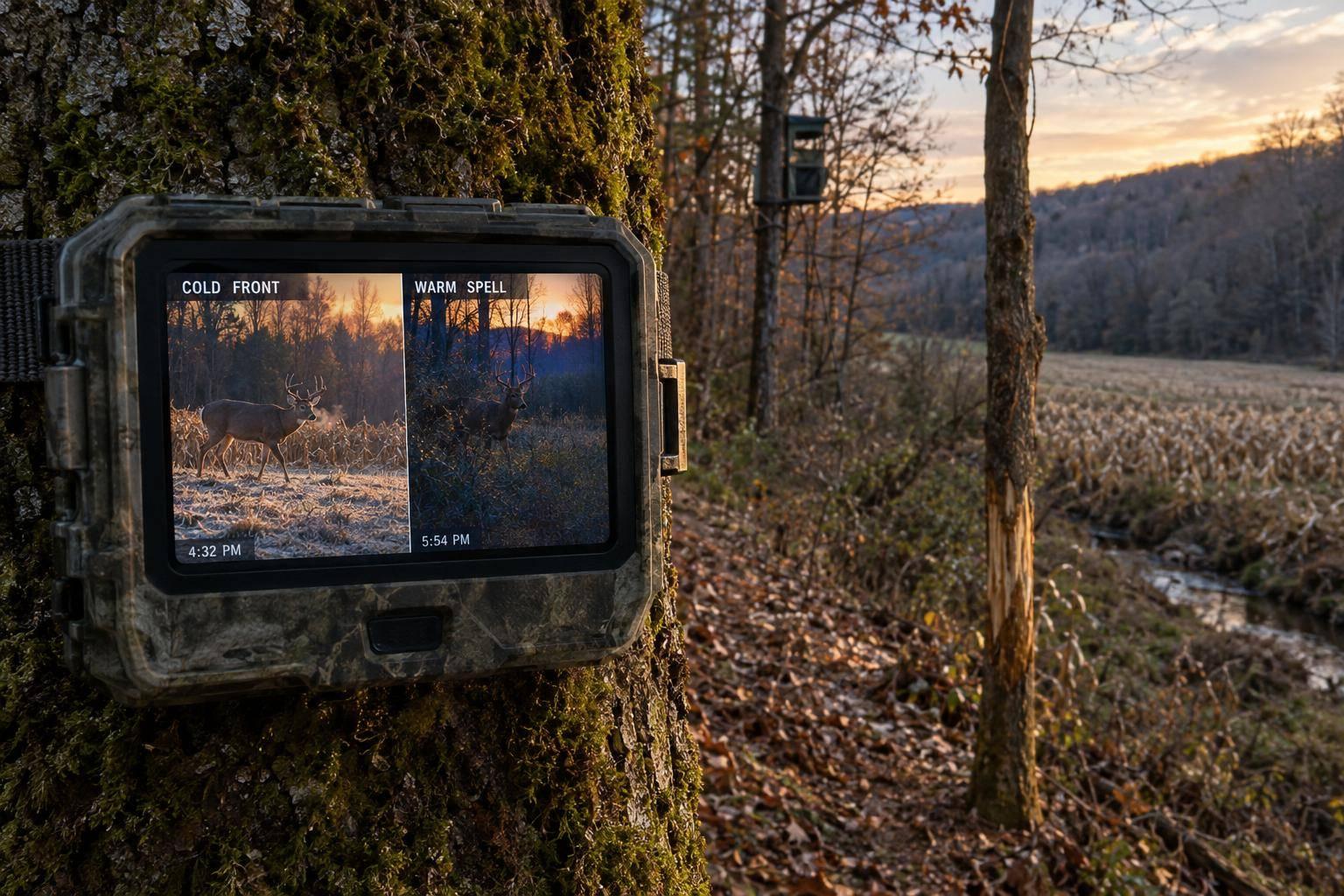
Weather is another critical factor. Sudden temperature drops or the arrival of a cold front can ramp up feeding activity. On milder days, deer are often more active at dawn and dusk, so plan your hunts around these windows. These weather patterns, combined with seasonal changes in food sources, can help you narrow down the best spots to hunt.
Speaking of food, as the season goes on, deer will shift their feeding locations based on what’s available. By staying aware of these changes, you can zero in on high-activity areas.
Finally, don’t overlook the impact of hunting pressure. Deer will adapt to avoid heavily trafficked areas, so scouting quieter spots and changing up your timing can give you an edge.
4. Position Tree Stands for Kentucky Terrain
Kentucky’s landscape, filled with oak and hickory trees, offers unique challenges and opportunities for tree stand placement. Success here hinges on understanding deer movement patterns and managing wind to control your scent. Wind direction is a critical factor when deciding where to set up your stand.
To stay undetected, always place your tree stand downwind or cross-wind of the areas where you expect deer activity. Whitetail deer have an incredible sense of smell, capable of picking up scents from half a mile away or more. As experts from Mossy Oak put it:
"You want to remain downwind or cross-wind of where you think the deer will be. This is the most important of the seven."
For versatility, set up at least two stands and keep a mobile climber stand handy for those times when you need to adjust quickly. Position your stand as high as safety permits – this not only helps disperse your scent but also improves your visibility. Be cautious about hunting in strong winds; anything over 20 mph can make scent control unpredictable and reduce your chances of success. Use trusted weather tools like AccuWeather to check wind forecasts before heading out, and confirm conditions once you’re on-site.
Finally, protect the integrity of deer bedding areas by maintaining strict scent control throughout the season. This discipline can make all the difference in keeping deer unaware of your presence.
5. Get Proper Licenses and Plan Your Hunt
Once you’ve fine-tuned your shooting skills, studied deer behavior, and set up your stands, the next step is making sure you’re legally ready and well-organized for your hunt. Before heading out in Kentucky, it’s essential to secure the appropriate licenses and permits. Keep in mind, Kentucky’s deer season kicks off on September 7th each year, so it’s a good idea to handle these legalities well in advance.
Combining this legal preparation with your scouting efforts and gear setup ensures you’re fully ready for a productive and enjoyable hunting experience.
Comparison Table
To complement the legal preparations mentioned earlier, here’s a quick reference table summarizing the key regulations for bow hunting equipment in Kentucky. Understanding these rules helps ensure you select the appropriate gear and secure the necessary licenses. Keep in mind that regulations and fees may change, so always verify the latest guidelines.
| Bow Type | Legal for Kentucky Hunting | Draw Weight Requirement |
|---|---|---|
| Compound Bow | Yes | Minimum draw weight as specified by current regulations |
| Recurve Bow | Yes | Minimum draw weight as specified by current regulations |
| Longbow | Yes | Minimum draw weight as specified by current regulations |
| Crossbow | Yes | Minimum draw weight as specified by current regulations |
Important Notes:
- A valid Hunting License and Deer Permit are required for all bow types.
- Kentucky allows the use of all major bow types during archery season as long as they meet state guidelines.
- Fees for licenses and permits may vary based on residency and eligibility.
For the most accurate and up-to-date information on seasons, fees, and equipment requirements, consult the official Kentucky wildlife regulations. Matching your gear to state standards ensures both ethical hunting and compliance with the law.
Conclusion
Bow hunting for whitetail deer in Kentucky demands a solid grasp of five key elements. Choosing the right equipment ensures your gear is reliable and accurate. Perfecting shot placement transforms fleeting opportunities into ethical, effective kills that honor the animal and boost your success rate.
Knowing whitetail behavior patterns during Kentucky’s hunting seasons gives you a critical edge, helping you anticipate deer movements and position yourself strategically. Placing your stand wisely in Kentucky’s varied terrain – whether it’s open fields, dense woods, or rolling hills – puts you in the best spot at the right time. And, of course, staying compliant with licensing requirements and planning your hunt keeps you prepared and on the right side of the law.
These elements work together seamlessly. Your equipment knowledge supports precise shots, while understanding deer behavior helps you choose the best stand locations. Legal preparation and thoughtful planning bring it all together, allowing you to focus entirely on the hunt. Kentucky’s diverse landscape demands adaptability, and mastering these fundamentals ensures you’re ready for whatever the terrain throws at you.
Beyond these basics, timing and conditions play a big role. Kentucky’s extended archery season and thriving whitetail population create an ideal environment to put these strategies into practice. Whether you’re navigating the rolling hills of northeastern Kentucky or setting up near agricultural edges, these principles will enhance your hunting effectiveness.
Success in bow hunting comes down to consistent practice and patience. With Kentucky’s long archery season, you have plenty of opportunities to refine your skills and apply these techniques throughout the year.
To prepare, ensure your gear meets Kentucky’s regulations and practice your shot placement regularly. Study deer patterns in your chosen hunting area and scout potential stand locations well ahead of the season. By combining these preparations with sound tactics in the field, you’ll set yourself up for a focused and rewarding hunt. With the right approach, Kentucky’s whitetail-rich habitat offers incredible opportunities for bow hunters.
FAQs
What should I consider when selecting a bow and gear for whitetail deer hunting in Kentucky?
When preparing for whitetail deer hunting in Kentucky, selecting the right bow and gear is key. Start by considering the draw weight. While Kentucky doesn’t enforce a minimum draw weight, it’s crucial to choose one that matches your strength and skill. The draw weight should be powerful enough to ensure a clean, ethical harvest, but also manageable for you to handle comfortably.
Next, think about the type of bow. Many hunters favor compound bows for their accuracy and user-friendly design. However, if you’re skilled with recurve or longbows, those can be effective options too. Whichever bow you choose, pair it with arrows suited to your draw weight and optimized for deep penetration, which is essential for success in the field.
Finally, focus on comfort and reliability. Your gear should fit you well and perform consistently, especially given Kentucky’s unpredictable hunting conditions. A well-tuned setup not only boosts your confidence but can also significantly enhance your overall hunting experience.
How can I adapt my hunting strategy to changes in deer behavior and weather during Kentucky’s hunting season?
Adapting your hunting approach to match shifts in deer behavior and weather patterns is crucial for a productive season in Kentucky. Whitetail deer are most active around dawn and dusk, but these routines can change depending on the weather. For instance, deer tend to move more during cold fronts, while heavy rain or strong winds often push them to seek shelter. Setting up your stand near natural windbreaks or water sources can give you an edge.
As early fall sets in and temperatures drop, deer are drawn to food-rich areas, such as oak trees loaded with acorns. Keeping an eye on the weather forecast and tracking deer movement will help you fine-tune your stand placement and hunting schedule. By staying alert and adaptable, you’ll improve your chances of success throughout the season.
What’s the best way to set up a tree stand in Kentucky to improve your chances of a successful whitetail hunt?
Setting up a tree stand in Kentucky’s diverse landscape takes some thoughtful preparation to boost your chances of a successful hunt. Start by identifying spots where deer are likely to travel, such as trails near water crossings, fence lines, or wooded pinch points. These areas tend to see a lot of deer activity, making them prime locations to catch whitetails on the move.
Wind direction is a crucial factor – always position your stand downwind of these travel routes to keep your scent from giving you away. Use the natural environment to your advantage by blending into surrounding trees or foliage for added concealment. Setting your stand at a height of 15–20 feet can give you a better view while staying out of the deer’s direct line of sight. And remember, stealth is key. Keep noise to an absolute minimum when setting up and entering your stand to avoid spooking nearby deer. By following these steps, you’ll set yourself up for a more rewarding hunt.