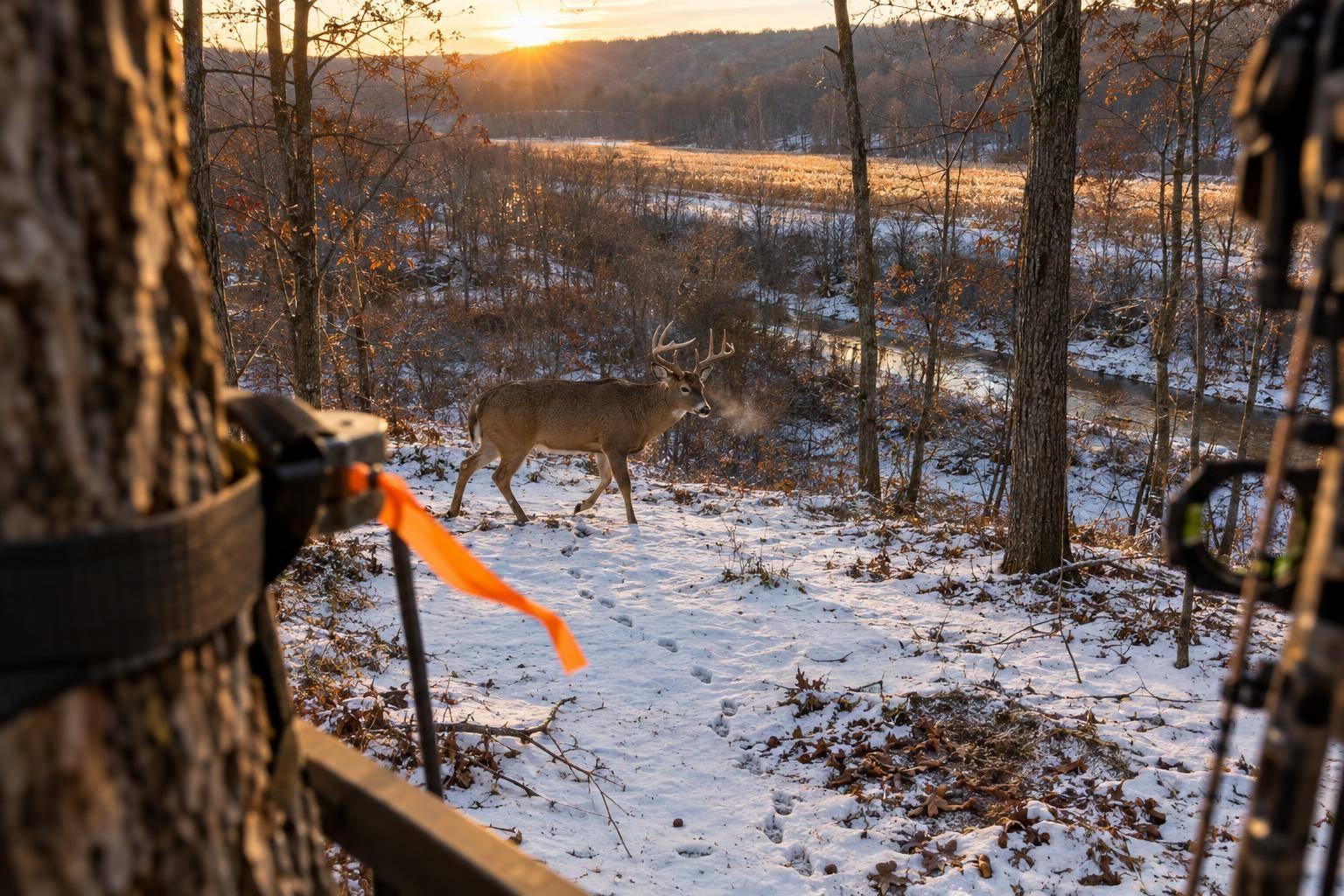
If you can’t draw or shoulder your weapon cleanly inside the blind, it’s the wrong blind.
I’d narrow this guide down to one simple rule: pick for shot room first, then match the blind to how far you carry it and how long you sit. In this list, the Banks The Stump Sequoia is the big fixed option, the Orion 6′ x 6′ Hexagon fits two hunters, the Orion 5′ x 5′ Pentagon suits solo setups, and a Natural Brush Blind works when I don’t want to haul gear at all.
Here’s what matters most at a glance:
- Best for space: Banks The Stump Sequoia – 80-inch interior height, 44+ sq. ft.
- Best for two hunters: Orion 6′ x 6′ Hexagon – 78-inch height, 250 lbs.
- Best for solo use: Orion 5′ x 5′ Pentagon – 78-inch height, 200 lbs.
- Best for long walks: Natural Brush Blind – 0 lbs., built from cover on site
- Best blind size for one hunter: about 5′ x 5′
- More room for two hunters or extra gear: about 6′ x 6′
- Good ceiling target for bow or crossbow clearance: about 6’6"
What I like about this article is that it stays focused on the stuff that changes a hunt:
- Interior room
- Window layout
- Packed weight
- Setup time
- Weather sealing
- Dark interior for hiding movement
The piece also matches each blind to ultimate whitetail hunts in Kentucky like creek crossings, bedding transitions, field edges, and rut travel corridors. That helps if you’re deciding between a carry-in setup and a blind you plan to leave in place.
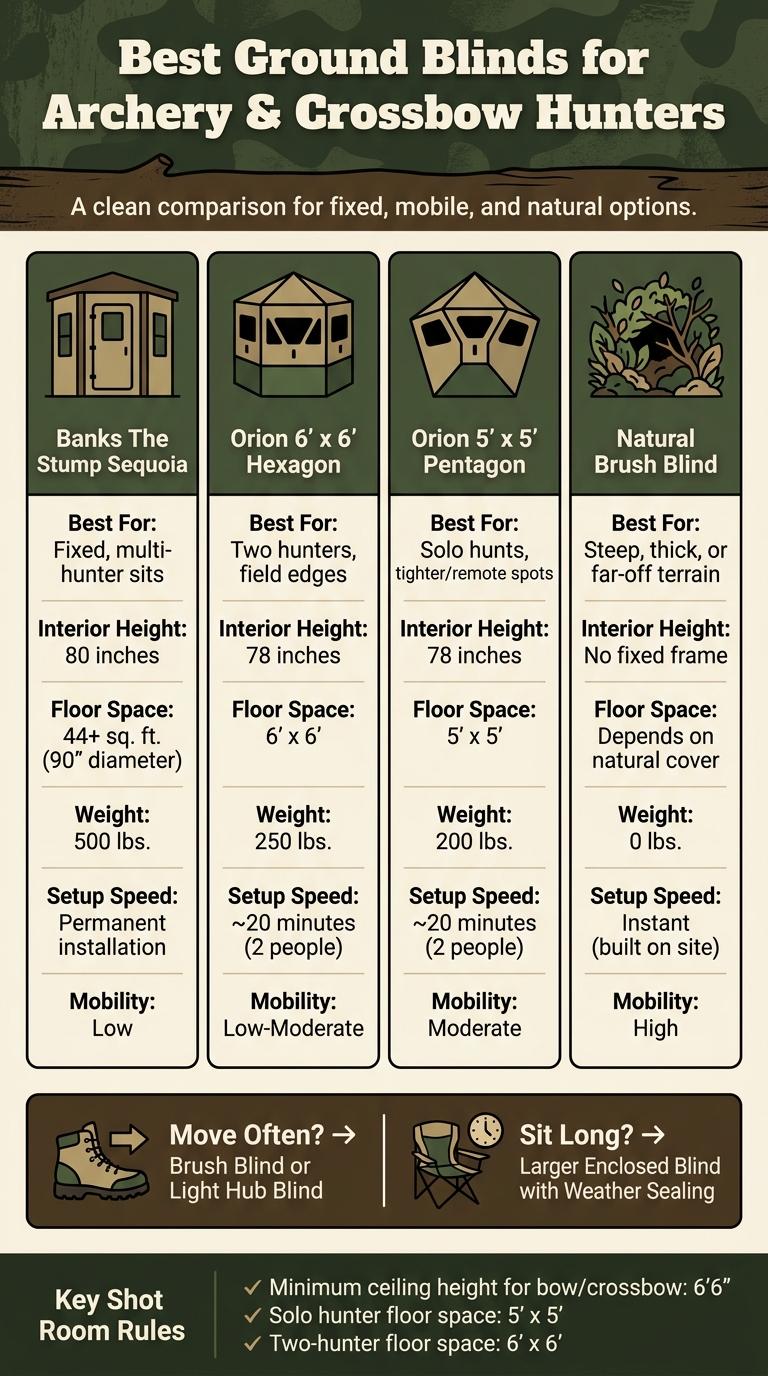
Ground Blind Comparison Chart for Archery & Crossbow Hunters
Tips for Bow Hunting in a Ground Blind | Midwest Whitetail
Quick Comparison
| Blind | Best For | Space | Weight | Setup |
|---|---|---|---|---|
| Banks The Stump Sequoia | Fixed, multi-hunter sits | 80" tall, 44+ sq. ft. | 500 lbs. | Permanent install |
| Orion 6′ x 6′ Hexagon | Two hunters, field edges | 78" tall, 6′ x 6′ | 250 lbs. | About 20 minutes |
| Orion 5′ x 5′ Pentagon | Solo hunts, tighter spots | 78" tall, 5′ x 5′ | 200 lbs. | About 20 minutes |
| Natural Brush Blind | Steep or far-off spots | Depends on cover | 0 lbs. | Built on site |
If I were choosing fast, I’d do it like this: move often = brush blind or light carry-in option; sit long = bigger enclosed blind with more room and better weather blocking.
What to Look for Before You Buy
Interior Space, Window Shape, and Shot Clearance
Start with space. If the blind is too tight, you’ll feel it the moment you try to draw a bow or shoulder a crossbow. A 6’6" ceiling gives bow and crossbow hunters enough room to move without hitting the roof. For floor space, a 5’x5′ blind works for one hunter, while a 6’x6′ blind gives two people more breathing room and extra space for gear.
Windows matter just as much. If the openings are too large, they make your movement easier to spot. Too small, and you end up with blind spots that can cost you a shot. The sweet spot is a window layout that gives you a clear view while still keeping you hidden, especially when the shot window is tight and you don’t want to lean outside the blind.
One thing people often miss is interior darkness. A dark interior with blackout lining on the roof and walls helps hide movement and cuts light leaks. That can make a big difference when a deer is close and looking your way.
Once the blind gives you enough room to shoot, the next thing to check is how easy it is to carry and set up.
Packed Weight, Setup Speed, and Carry Comfort
If you’re hunting creek bottoms, hedgerow edges, or field edges in Northeastern Kentucky, you’re often walking rough ground on Kentucky whitetail hunts to get in and out. A blind that’s heavy, bulky, or awkward to haul tends to get left in the truck.
That’s why hub-style pop-up blinds make sense for mobile hunters. They fold flat, pack easier, and go up fast. When you’re moving on fresh sign, that speed matters. A lighter hub-style blind is also easier to carry into creek bottoms, hedgerows, and field edges, which means you’ll use it more often than a heavier model.
After that, look at how well the blind blends in and how it handles bad weather.
Concealment, Weather Resistance, and Sit Comfort
A camo pattern helps, but by itself it usually isn’t enough. Use brush loops or add vegetation from the area to break up the blind’s outline. In windy, brushy setups, that extra cover can be the difference between a blind that blends in and one that sticks out.
For weather, pay attention to seams and build quality. Tight seams and weatherproof construction matter. A 1-inch bulb seal on the seams is a strong sign the blind can handle wind and rain. In the Kentucky hills, wind can be a real headache. If a blind shifts, rattles, or flaps, it can spook deer and make it tougher to stay steady for a shot.
Also, don’t skip the small stuff: test the seat and floor for creaks. A little noise at full draw can wreck a close shot.
Best Ground Blinds for Archery and Crossbow Hunters
Use the criteria above to sort these blinds by room, mobility, and shot window.
1. Banks The Stump Sequoia (Pro Hunter Phantom)
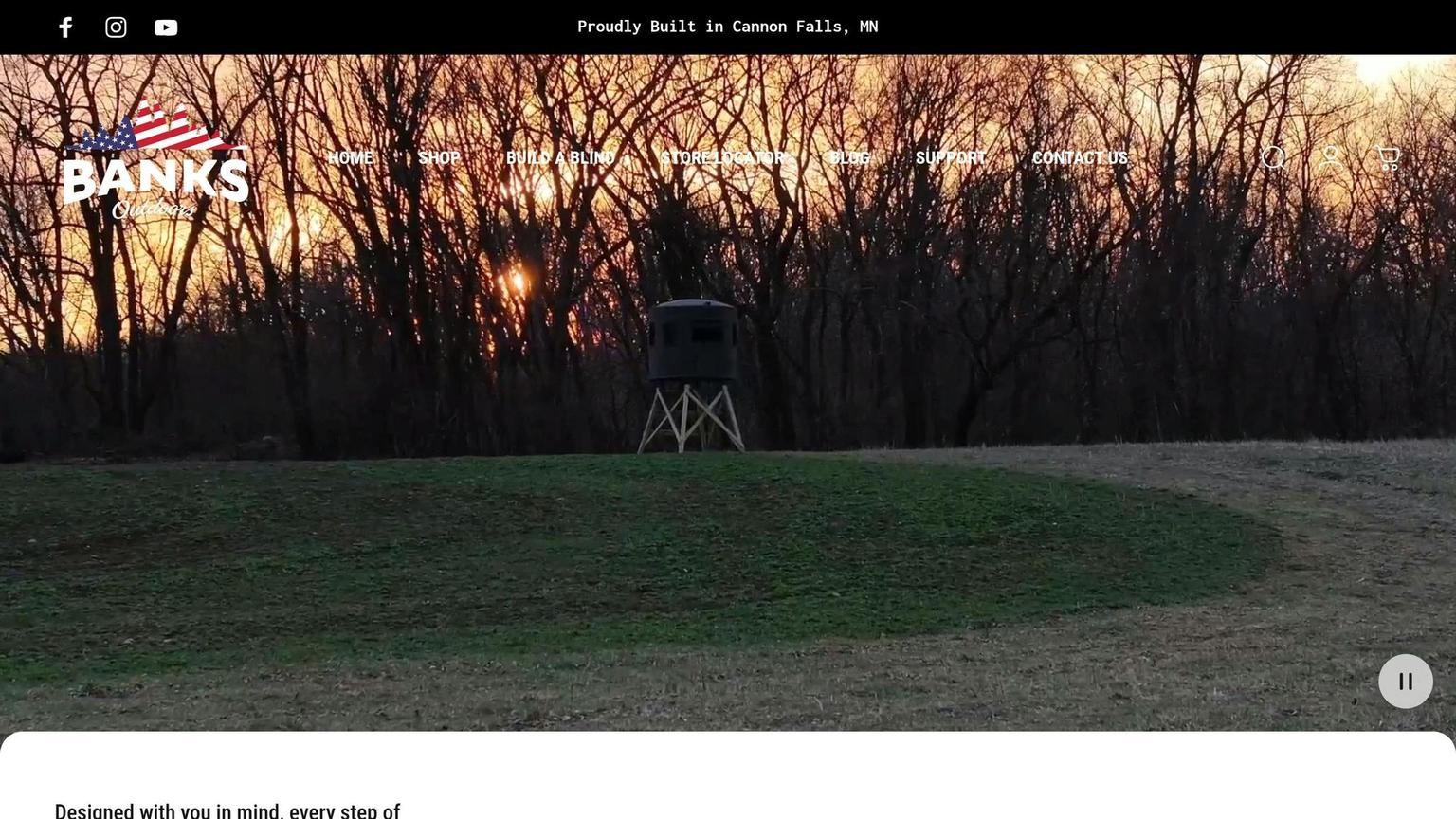
This is the biggest blind on the list. With an 80-inch interior height, a 90-inch diameter, and more than 44 square feet of floor space, it gives bow and crossbow hunters plenty of room to draw without feeling cramped. That extra space also helps on long sits, especially if more than one hunter is inside. If you’re planning a trip, you can contact a Kentucky hunting guide to discuss the best blind setups for local terrain.
It comes with eight silent-swinging tinted windows, so you can keep an eye on movement without giving up concealment. The tradeoff is weight and portability. This blind makes the most sense for permanent or semi-permanent setups where comfort matters more than easy transport.
2. Orion 6′ x 6′ Hexagon
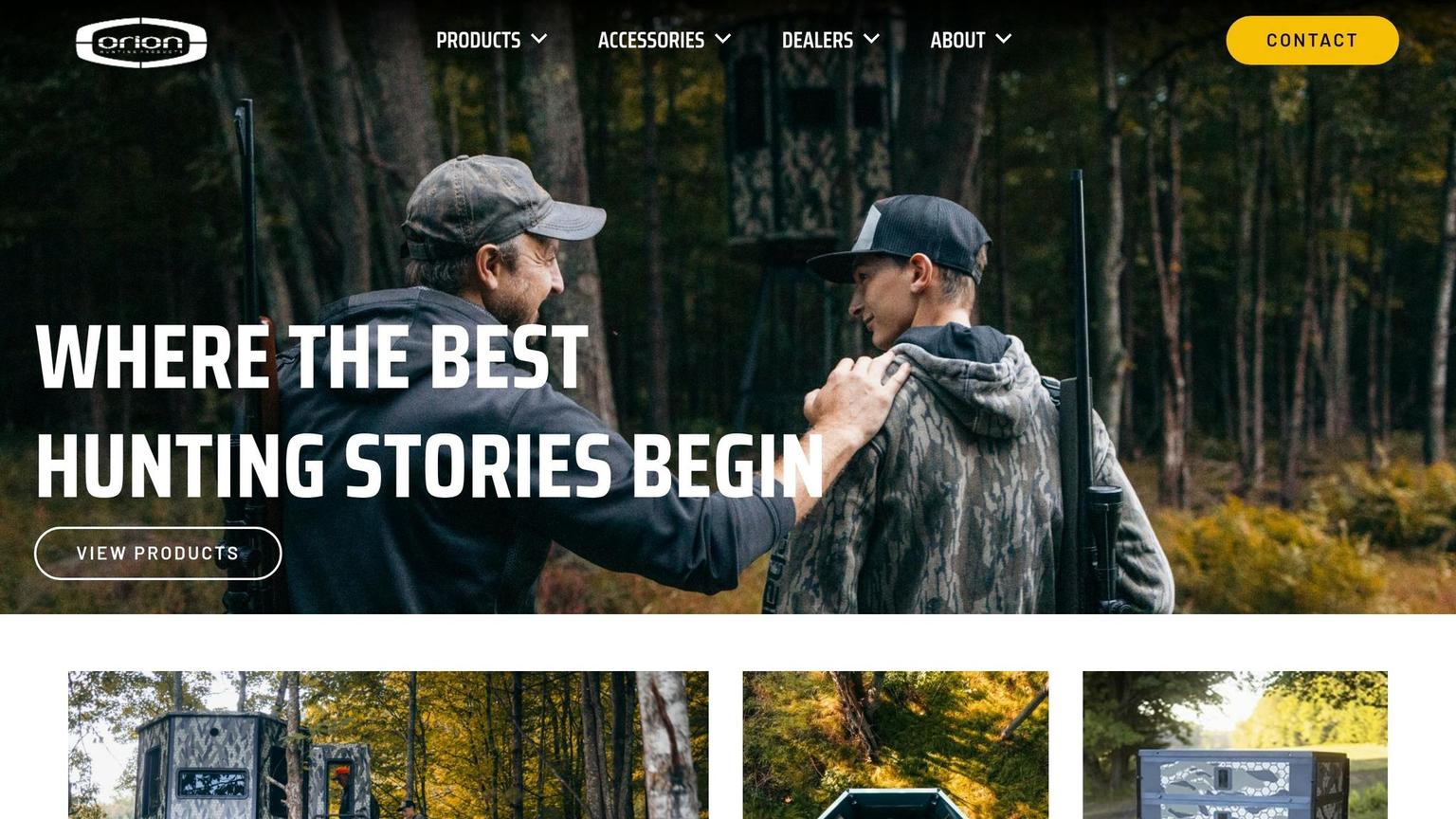
The Orion 6′ x 6′ Hexagon gives you room close to the Sequoia, but it’s easier to move. Two hunters can put it together in about 20 minutes with a tool-less quick-latch system, which cuts down setup hassle. Each modular panel weighs less than 40 lbs., and the full blind comes in at about 250 lbs.
That still isn’t light, of course. But it does fit in a pickup bed, which makes it a solid pick for field edges and two-person sits where you want space without committing to a full permanent install.
3. Orion 5′ x 5′ Pentagon
Once you get past the biggest blinds, carry-in ease and setup speed start to matter a lot more. That’s where the Orion 5′ x 5′ Pentagon fits in. It uses the same tool-less quick-latch design as the Hexagon, but at about 200 lbs., it’s easier to move and place in tighter or more remote spots.
It also works well for solo hunts. The blackout interior helps hide movement when deer get close, which can make a big difference when you’re drawing at short range.
For hunters who want the lightest setup possible, the budget pick strips things down even further.
4. Natural Brush Blind
The Natural Brush Blind is as simple as it gets. No frame, no carry weight, and no setup time. You build it from the cover that’s already there, which makes it a strong fit for steep, thick, or far-off terrain where hauling gear is a pain.
It also blends in better than a pop-up in spots like creek bottoms, hedgerows, and transition routes. In those areas, a blind made from natural cover can look a lot less out of place.
| Blind | Interior Height | Footprint | Weight | Setup Speed | Best Use |
|---|---|---|---|---|---|
| Banks The Stump Sequoia (Pro Hunter Phantom) | 80" | 90" diameter; 44+ sq. ft. | 500 lbs | Permanent installation | Permanent, multi-hunter setups |
| Orion 6′ x 6′ Hexagon | 78" | 6′ x 6′ | 250 lbs | ~20 min (2 people) | Field edges and two-person sits |
| Orion 5′ x 5′ Pentagon | 78" | 5′ x 5′ | 200 lbs | ~20 min (2 people) | Remote spots and solo hunts |
| Natural Brush Blind | No fixed frame | Natural cover | 0 lbs | Instant | Steep, thick, or distant terrain |
Matching Your Blind to Kentucky Whitetail Setups
Kentucky’s creek bottoms, field edges, and ridge cover don’t all hunt the same. A blind that works in a tucked-away crossing can feel way too bulky on a long walk, while a small setup can get cramped fast on a field edge. That’s why it helps to match the blind’s room, weight, and concealment to the ground you hunt.
Mobile Blinds for Creek Crossings and Bedding Transitions
In tight cover like creek crossings and bedding transitions, small hub blinds or natural brush setups usually make the most sense. They keep your footprint small and help cut down on noise. Lightweight hub blinds in the 15–25 lb. range are easier to carry in quietly, set up fast, and remove without leaving much pressure behind.
A hub blind that goes up in under 90 seconds can also help limit pressure. That matters in spots where deer don’t put up with much disturbance. If the walk is long or the terrain gets steep, natural cover is the lightest and easiest option of all.
When the cover starts to open up, the goal changes. At that point, it’s less about staying tiny and more about having enough room to make the shot cleanly.
Larger Blinds for Field Edges, Travel Corridors, and All-Day Rut Sits
Pre-scouted field edges and travel corridors are where bigger blinds start to make a lot more sense. Larger modular blinds, like Orion’s 6′ x 6′ model at about 250 lbs., can ride in a standard pickup bed and be put together by two hunters in about 20 minutes. That makes them a practical pick for field-edge setups where you plan to sit all day during the rut.
That extra space also helps crossbow hunters. More room inside the blind makes it easier to swing onto a target without the limbs hitting the fabric walls.
Season changes the equation too.
Blind Features by Season: Early Velvet, Leaf-Off Timber, and Late-Season Wind
Season shifts what matters most. In early velvet, airflow matters. After the leaves drop, concealment becomes the bigger issue. And late in the season, wind can make or break a sit.
| Season | Priority Blind Feature | Key Tip |
|---|---|---|
| Early Velvet | Ventilation & heavy brush-in | Match lush surroundings; avoid heat buildup |
| Leaf-Off Timber | Dark interior & solid backdrop | Prevent silhouetting; limit open windows |
| Late Season | Weather-sealed seams & staking | Block wind on exposed ridges and field edges |
Conclusion: Picking the Right Blind for Your Shot Room and Hunting Style
The best ground blind for a bow or crossbow hunter comes down to one simple tradeoff: enough room to make a clean shot vs. a setup that fits the way you hunt. If a blind feels too tight, you lose shot chances. If it’s too bulky or heavy, getting into the spots that matter most gets a lot harder.
Pick the blind that lines up with how often you move and how much space your shot needs. The goal is simple: get enough shot room without giving up concealment.
Use this quick match-up to narrow the list.
| Blind Name | Ideal Terrain | Ideal Season | Mobility Level |
|---|---|---|---|
| Barronett Ox 5 | Field edges / open timber | Late season (wind resistance) | Low |
| Primos Double Bull SurroundView 270 | Creek crossings / bedding transitions | Early velvet (high visibility) | Moderate |
| Muddy Infinity 3-Person | Large food plots | All-day rut sits | Low |
| Rhino 150 | Travel corridors | Mid-season / pre-rut | Moderate |
| Ameristep Care Taker | Thick brush / tight quarters | Early season | High |
| Barronett Prowler | Hedgerows / transitions | Early to mid-season | High |
The breakdown comes back to one thing: do you move often, or do you sit long? Hunters who follow fresh sign usually get more out of a lightweight hub blind or natural cover. Hunters who lock in on a proven field edge or food plot for all-day rut sits usually do better with a roomier, weather-sealed blind. Match the blind to your ground, and brush it in before you hunt. If you’re ready to put these tactics to the test, you can book a hunt in prime whitetail territory.
FAQs
How much blind space do I really need?
The right blind size comes down to your setup and how many hunters will be inside. For solo hunts, a 5-foot by 5-foot blind is usually enough. If you’re hunting with two adults, a 6-foot by 6-foot interior tends to feel a lot better.
No matter the footprint, pick a blind that keeps you hidden and still gives you enough space to draw a bow or shoulder a crossbow without bumping into the walls.
What blind works best for long walks?
For long walks into remote or hard-to-access hunting areas, keeping weight down matters. Traditional ground blinds can hide you well, but they’re often bulky and awkward to pack in.
If mobility is the top priority, still hunting with natural cover is the most efficient choice. And if you want to hunt from above the ground, a saddle hunting system gives you more mobility while keeping your full setup under 15 pounds.
How do I brush in a ground blind better?
Use local vegetation like brush, branches, or tall grass from the area to help your ground blind blend into its surroundings. You’re trying to break up the blind’s shape and soften those hard, straight edges so it doesn’t stick out like a sore thumb.
At the same time, keep your sightlines clear. Openings should be just large enough to see and shoot through, but still small enough to hide movement inside. When you brush in a blind the right way, mature whitetails are far more likely to read it as part of the habitat instead of some new object that doesn’t belong.