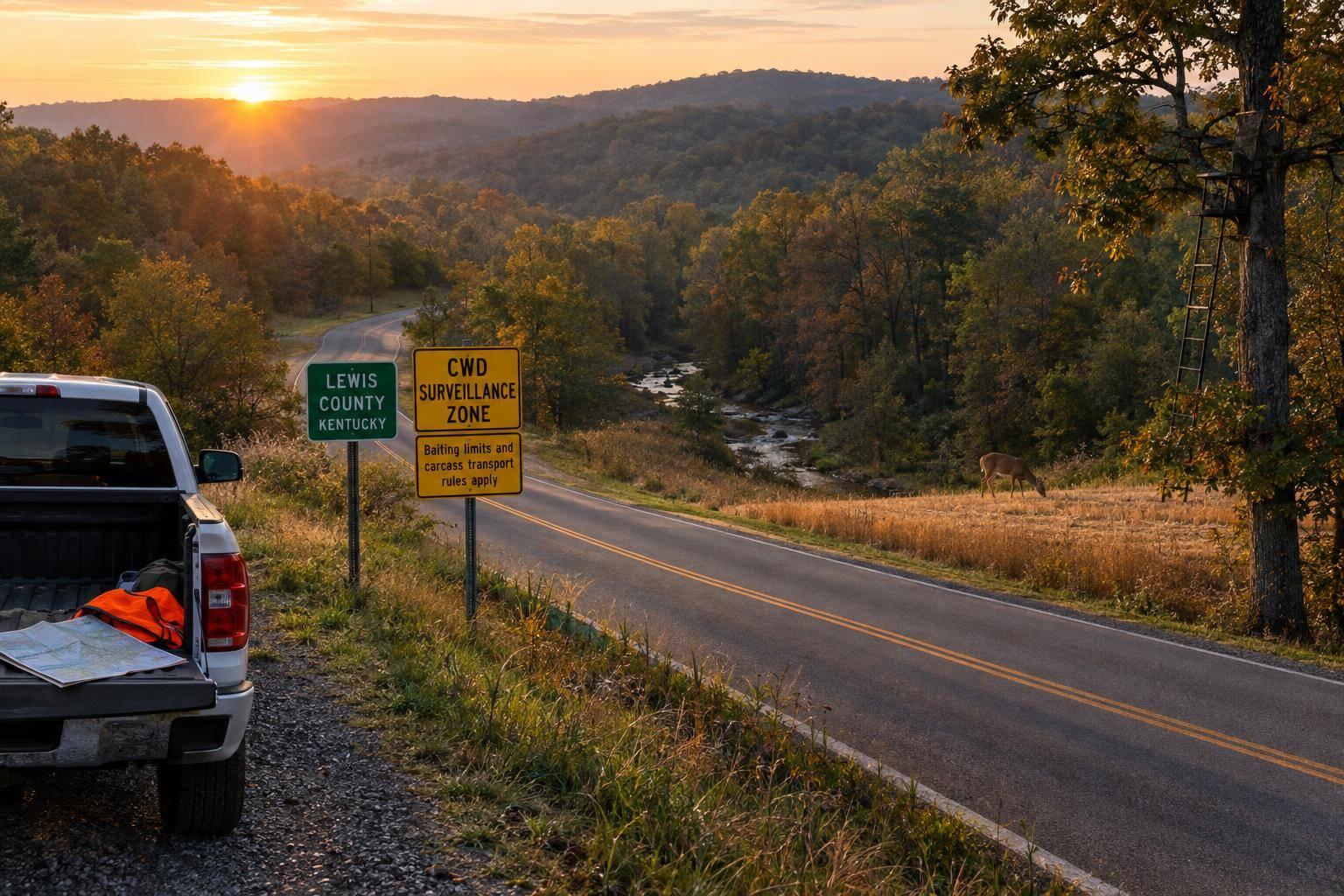
Frost seeding clover is a simple, low-cost way to create food plots for deer, costing about $30 per acre. By scattering seeds on frozen ground in late winter, natural freeze-thaw cycles work the seeds into the soil. This method requires minimal equipment, like a broadcast spreader, and avoids the need for heavy machinery or extensive preparation. Clover not only provides high-protein forage for deer but also enriches the soil by fixing nitrogen, reducing fertilizer costs.
Key Points:
- Cost: ~$30 per acre.
- Timing: Best between February 10 and March 1 in Kentucky.
- Equipment: Basic broadcast spreader (handheld or ATV-mounted).
- Seed Types: Red and white clover (6–8 lbs red, 1–2 lbs white per acre).
- Preparation: Clear vegetation, test soil (pH 6.5–7.0), and inoculate seeds with Rhizobium bacteria.
This method is ideal for small-scale plots and ensures healthy, thriving clover to attract and nourish deer throughout the growing season.
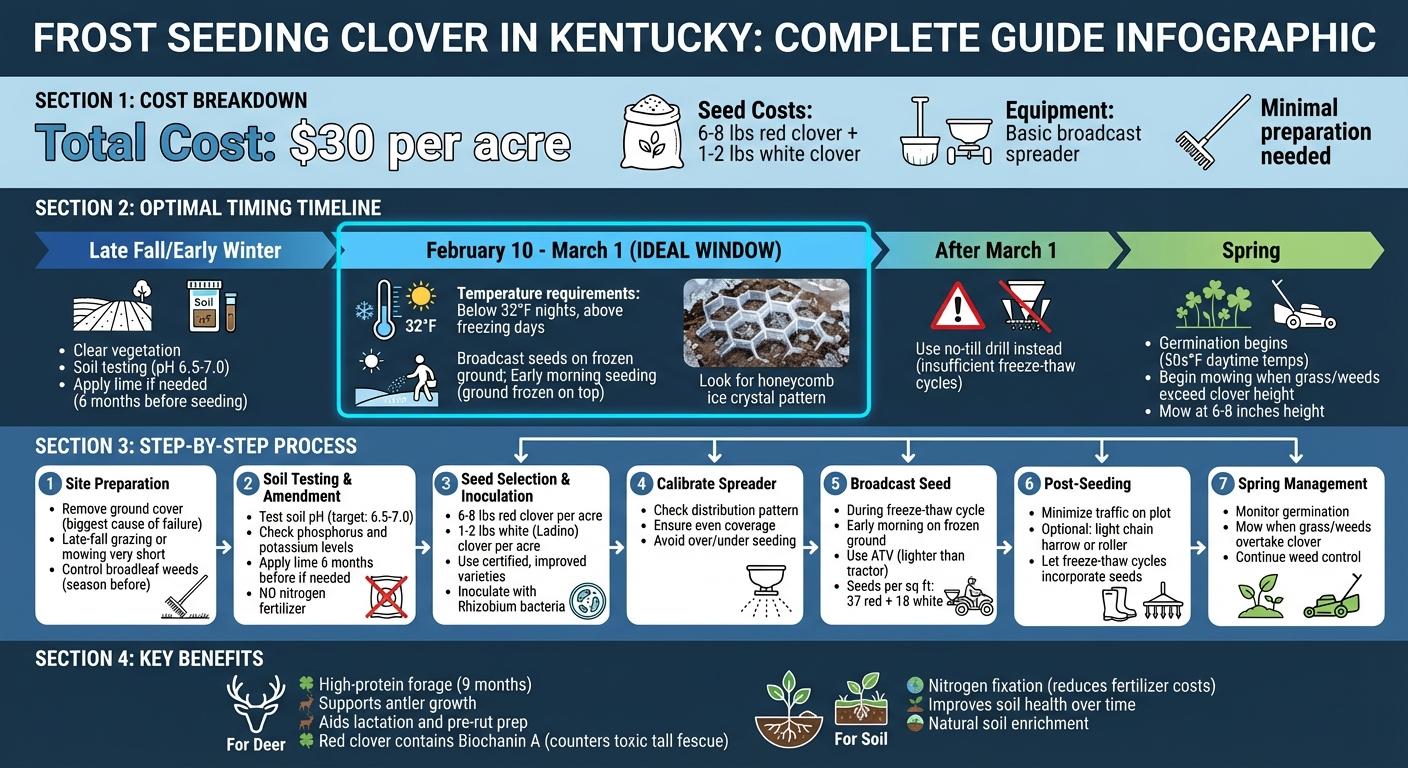
Frost Seeding Clover Timeline and Process for Kentucky Food Plots
Frost Seeding 101: Best Way to Plant Clover for Deer Without Equipment
What is Frost Seeding Clover?
Frost seeding is a straightforward method of planting clover by scattering seed over frozen ground in late winter. The freeze-thaw cycles of the season naturally work the seeds into the soil. Dr. Chris Teutsch, an Extension Forage Specialist at the University of Kentucky, puts it simply:
"Frost seeding is accomplished by simply broadcasting the seed on the soil surface and allowing the freezing and thawing cycles to incorporate the seed into the soil."
This hands-off approach makes planting easier and sets up ideal conditions for the clover to thrive.
Both red and white clovers adapt well to this method. The seeds settle into the soil’s cracks, germinate quickly, and, once established, form a beneficial partnership with Rhizobium bacteria. This relationship naturally reduces the need for additional fertilizers. Kentucky’s freeze-thaw patterns are particularly suited for this process, ensuring the seeds are properly incorporated into the soil. With just a basic broadcast spreader – either handheld or mounted on an ATV – you can create a high-quality clover plot for about $30 per acre.
These clover plots not only provide a nutrient-rich food source for whitetail deer but also improve soil health over time.
Best Timing for Frost Seeding in Kentucky
Frost seeding in Kentucky is most effective during the natural freeze–thaw cycle, typically from February 1 to early March. The sweet spot, however, falls between February 10 and March 1. Dr. Ray Smith, Extension Forage Specialist at the University of Kentucky, highlights this timing:
"In Kentucky, the ideal time to frost seed is between February 10 and March 1, with mid-February preferred."
This period allows the freeze–thaw cycles to work their magic, gently pressing seeds into the soil for better germination.
The key to success lies in having several cycles where nighttime temperatures dip below 32°F, followed by daytime temperatures above freezing. A week of these conditions provides the best chance for seeds to settle into the soil naturally. After March 1, the reduced frequency of these cycles makes broadcast seeding less reliable. Dr. Chris Teutsch offers this advice:
"After March 1, drilling legumes into pastures with a no-till seeder is recommended since there may not be enough freezing and thawing cycles to adequately incorporate seed."
It’s also essential to check ground conditions before you start. Avoid seeding over deep snow or areas with standing water, as these can wash seeds away. Early mornings are ideal for spreading seeds because the soil’s top layer is still frozen, reducing the risk of equipment leaving ruts. If you notice a honeycomb-like pattern of ice crystals on the soil, you’ve found perfect conditions for frost seeding.
Kentucky’s unpredictable weather and recent trends toward milder winters may shift the optimal seeding window earlier in some years . Keep an eye on local forecasts and adjust your plans accordingly to make the most of the conditions.
Choosing the Right Clover for Frost Seeding
Best Clover Varieties
When it comes to frost seeding in Kentucky, red clover and white clover are excellent choices. They germinate quickly, tolerate shade well, and develop strong seedlings that thrive under challenging conditions.
Red clover stands out for containing Biochanin A, a natural vasodilator that helps offset the harmful effects of toxic tall fescue.
"Compounds found in red clover can reverse vasoconstriction that is caused by the ergot alkaloids in toxic tall fescue. The primary compound found in red clover is a vasodilator called ‘Biochanin A.’"
White clover, especially improved Ladino varieties, is prized for its persistence and high protein levels. To maximize results, opt for certified, improved varieties instead of generic "Variety Not Stated" seeds. Jimmy Henning highlights the importance of this choice, noting that superior red clover varieties can produce up to three tons more hay per acre and last longer than unclassified options.
Seeding Rates and Inoculation
For a food plot costing around $30, you’ll need 6–8 pounds of red clover and 1–2 pounds of improved white (Ladino) clover per acre. This mix provides approximately 37 red clover seeds and 18 white clover seeds per square foot.
To ensure success, inoculate your clover seed with Rhizobium bacteria, which promotes nitrogen fixation. Many improved clover varieties come pre-inoculated, but if yours doesn’t, be sure to apply the proper inoculant before broadcasting.
"Inoculate Legume Seed – This is relatively inexpensive insurance that legume roots will be well nodulated and efficient nitrogen fixation will take place."
Once you’ve chosen your clover varieties and inoculated the seeds, the next step is preparing your site to ensure the seeds are well-incorporated into the soil.
Preparing the Site for Frost Seeding
Weed Control and Seedbed Preparation
Too much ground cover can be a major hurdle when it comes to successful frost seeding. Dr. Jimmy Henning from the University of Kentucky emphasizes this point:
"The biggest cause of seeding failure with frost seedings is too much ground cover."
For frost seeding to work, seeds need to come into direct contact with bare soil. Thick grass or thatch acts as a barrier, preventing the seeds from absorbing moisture properly. To prepare the soil, focus on exposing it in late fall or early winter. This ensures seeds can establish themselves effectively.
Late-fall grazing is a practical way to reduce grass and thatch, creating the ideal seedbed. If grazing isn’t possible, mowing vegetation very short or using a chain harrow can also help expose the soil.
Broadleaf weed control is another critical step. Dr. Chris Teutsch, Extension Forage Specialist at the University of Kentucky, advises tackling weeds the season before frost seeding. This ensures that young clover seedlings won’t have to compete with well-established broadleaf plants.
Once the weeds are under control, it’s time to evaluate your soil’s nutrient levels.
Soil Testing and Amendments
Before purchasing clover seed, perform a soil test. Dr. Henning stresses that without a recent soil test, nutrient recommendations are just educated guesses. Clover grows best in soil with a pH between 6.5 and 7.0 and requires medium to high levels of phosphorus and potassium.
If your soil test reveals a low pH, apply lime at least six months before seeding. This allows the soil chemistry enough time to adjust. Early lime application is key to improving soil fertility when needed.
Avoid using additional nitrogen fertilizer on frost-seeded fields. Nitrogen encourages grass and weed growth, which can overpower young clover seedlings. The only exception is when nitrogen is included in diammonium phosphate (DAP), as it also raises phosphorus levels.
How to Frost Seed Clover: Step-by-Step
Once you’ve prepped your site, here’s a clear guide to help you carry out the frost seeding process effectively.
Calibrating and Using a Broadcast Spreader
Before you begin, make sure your spreader is properly calibrated. Dr. Chris Teutsch, an Extension Forage Specialist at the University of Kentucky, offers this critical advice:
"Calibrate your seeder prior to planting… Seeding at too high of a rate needlessly results in higher seed costs. On the other hand, seeding at too low a rate results in weak stands and lower productivity."
Most frost seeding setups use a spinner-type spreader, which can be hand-held, ATV-mounted, or tractor-mounted. Single-disk spinner spreaders are common, but they can sometimes distribute more seed to one side. Always check your spreader’s pattern and adjust it to ensure even coverage across your plot.
Broadcasting Seed on Frozen Ground
Timing is crucial in frost seeding. Aim to broadcast your seed during the freeze-thaw cycle, which naturally creates small soil cracks that pull seeds to an ideal planting depth of about 1/4 inch.
Austin Delano from Mossy Oak Gamekeeper emphasizes timing and equipment choice:
"To avoid ruts and soil compaction it helps to broadcast your seed early in the morning when the ground is still frozen on top."
Whenever possible, use an ATV instead of heavier machinery like a tractor. ATVs are lighter and reduce the risk of soil compaction or creating ruts, especially in wet, late-winter conditions. If you’re seeding after March 1, the freeze-thaw cycle may be ending. In that case, using a no-till drill might be a better option. Once you’ve achieved even seed distribution, you’re ready for the next steps.
After Seeding
After broadcasting the seed, minimize foot and vehicle traffic on the plot to let the freeze-thaw cycles naturally work the seeds into the soil. For better seed-to-soil contact, you can lightly drag a chain harrow or use a corrugated roller immediately after seeding. This step presses the seeds into the soil without burying them too deeply.
As spring temperatures rise, monitor your plot closely. Germination typically begins when daytime temperatures consistently reach the 50s°F. Once seedlings appear, it’s time to manage competition from existing grasses and weeds. From there, you can focus on maintaining your clover food plots to attract whitetail deer.
Managing Clover Food Plots for Whitetail Deer
Mowing and Weed Control
Keeping clover plots healthy starts with regular mowing. As soon as grasses and weeds begin to grow taller than the clover, it’s time to cut them back. Set your mower height to 6–8 inches to avoid damaging the young clover plants. Dr. Jimmy Henning, a Plant and Soil Science Professor at the University of Kentucky, highlights the importance of this practice:
"Be prepared for timely mowing to control grass or weed overgrowth above the clover. Although clover seeds are inherently vigorous, controlling competition can expedite and improve establishment."
Skip the nitrogen fertilizer – clover doesn’t need it. Thanks to its partnership with soil bacteria, clover creates its own nitrogen, which helps it thrive without extra input.
By staying on top of mowing and weed control, you’ll not only encourage strong clover growth but also ensure the plants provide maximum nutritional benefits for whitetail deer.
Nutritional Benefits: Enhancing Deer Health
When properly maintained, clover plots are a powerhouse of nutrition for whitetail deer. Clover offers high-protein forage that’s essential during critical periods like antler growth, lactation, and pre-rut preparation. An added bonus? Red clover contains Biochanin A, a compound that acts as a vasodilator. This helps counteract the negative effects of toxic tall fescue, a common grass found in Kentucky pastures. University of Kentucky Extension Specialists Jimmy Henning, Ray Smith, and Chris Teutsch explain:
"The primary compound found in red clover is a vasodilator called ‘Biochanin A.’"
Healthy clover plots not only attract deer but also contribute to their overall well-being, making them a valuable addition to any wildlife management plan.
Conclusion
Frost seeding clover is an affordable and straightforward way to improve your land while providing high-protein forage that attracts whitetail deer for up to nine months. At about $30 per acre, this method not only supports deer nutrition but also naturally improves soil quality. The best part? You don’t need fancy equipment or heavy tillage – just a broadcast spreader and the freeze-thaw cycles of nature to get the job done.
For the best results, timing is everything. Seed between February 10 and March 1 to ensure proper seed-to-soil contact. Clear away any excess vegetation, opt for improved red clover varieties for better yields, and make sure your soil pH is in the ideal range of 6.5 to 7.0. Key practices like seeding during this window, ensuring good seed placement, and mowing in the spring are essential for success.
Beyond being cost-effective, clover offers major nutritional perks. Its high protein content aids antler growth and helps deer recover from tough winters. In areas like Kentucky, where toxic tall fescue is common, red clover provides an extra benefit. Its Biochanin A compound helps counteract the harmful effects of fescue, making it even more valuable.
Whether you’re managing a sprawling property or a small plot, frost seeding clover is a practical, low-maintenance solution. By sticking to these steps, you can create productive food plots that enhance your land and boost your hunting opportunities.
Don’t wait – capitalize on Kentucky’s brief freeze-thaw window. This simple method supports your deer herd while keeping your budget in check.
FAQs
What makes clover a good choice for deer food plots in Kentucky?
Clover is a great option for deer food plots in Kentucky, offering a nutritious and appealing food source for whitetail deer. Its ability to flourish in Kentucky’s climate makes it a dependable choice for hunters and landowners alike. On top of that, clover naturally boosts soil health by fixing nitrogen, which cuts down on the need for synthetic fertilizers and helps save on costs.
What’s more, clover plays a key role in improving deer health. It helps neutralize toxins found in tall fescue, enhancing the overall quality of forage and supporting stronger, healthier deer populations. By planting clover, you’re not just improving your land – you’re also providing a sustainable and budget-friendly food source for local wildlife.
Why is the freeze-thaw cycle important for frost seeding clover?
The freeze-thaw cycle plays an essential role in frost seeding clover. As temperatures fluctuate, the soil freezes and thaws, creating tiny cracks. These cracks act as natural seed catchers, ensuring the small clover seeds make good contact with the soil. With each cycle, the soil expands and contracts, gradually pulling the seeds deeper into the ground. This natural process prepares the seeds for germination when spring temperatures rise, making frost seeding a practical and cost-effective method for planting.
Why should I inoculate clover seeds with Rhizobium bacteria before planting?
Inoculating clover seeds with Rhizobium bacteria plays a key role in ensuring the success of your clover plots. These bacteria enable clover plants to extract nitrogen from the air and transform it into a form they can use – a process called nitrogen fixation. This not only enriches the soil but also enhances the quality and yield of the forage.
By taking the step to inoculate your seeds, you’re creating the ideal conditions for thriving clover plots. And as a bonus, these lush plots are more likely to attract and support a healthy population of whitetail deer on your property.