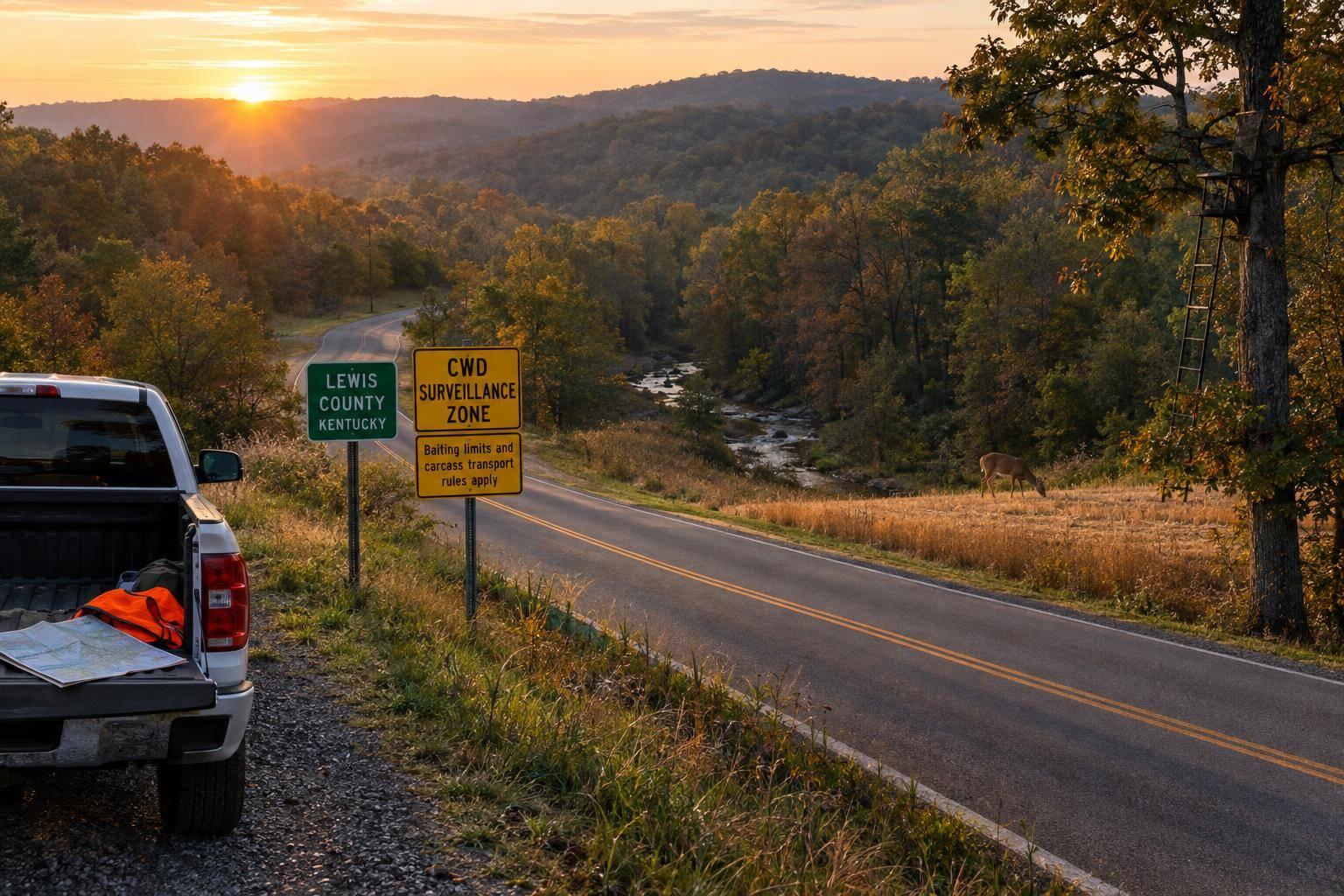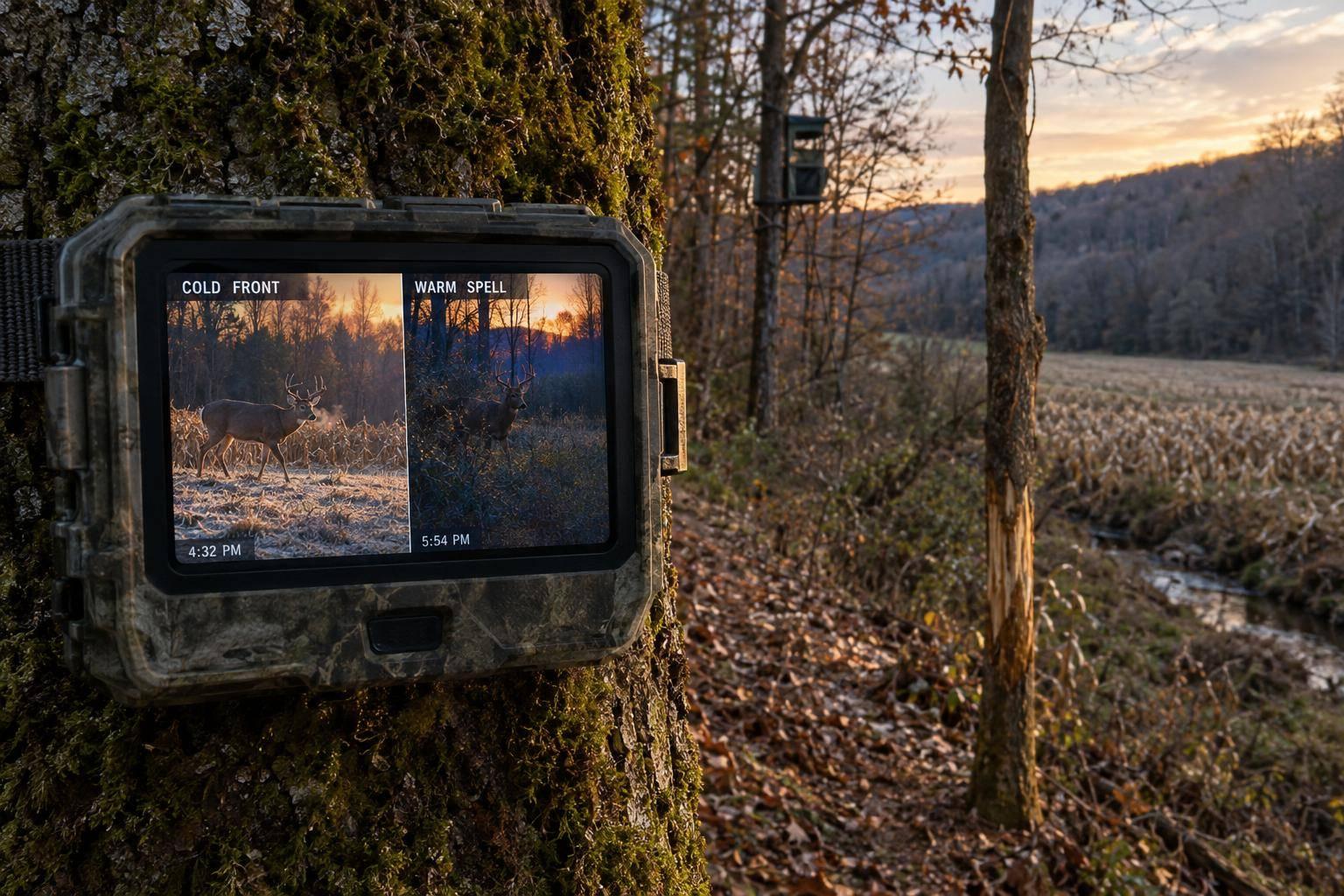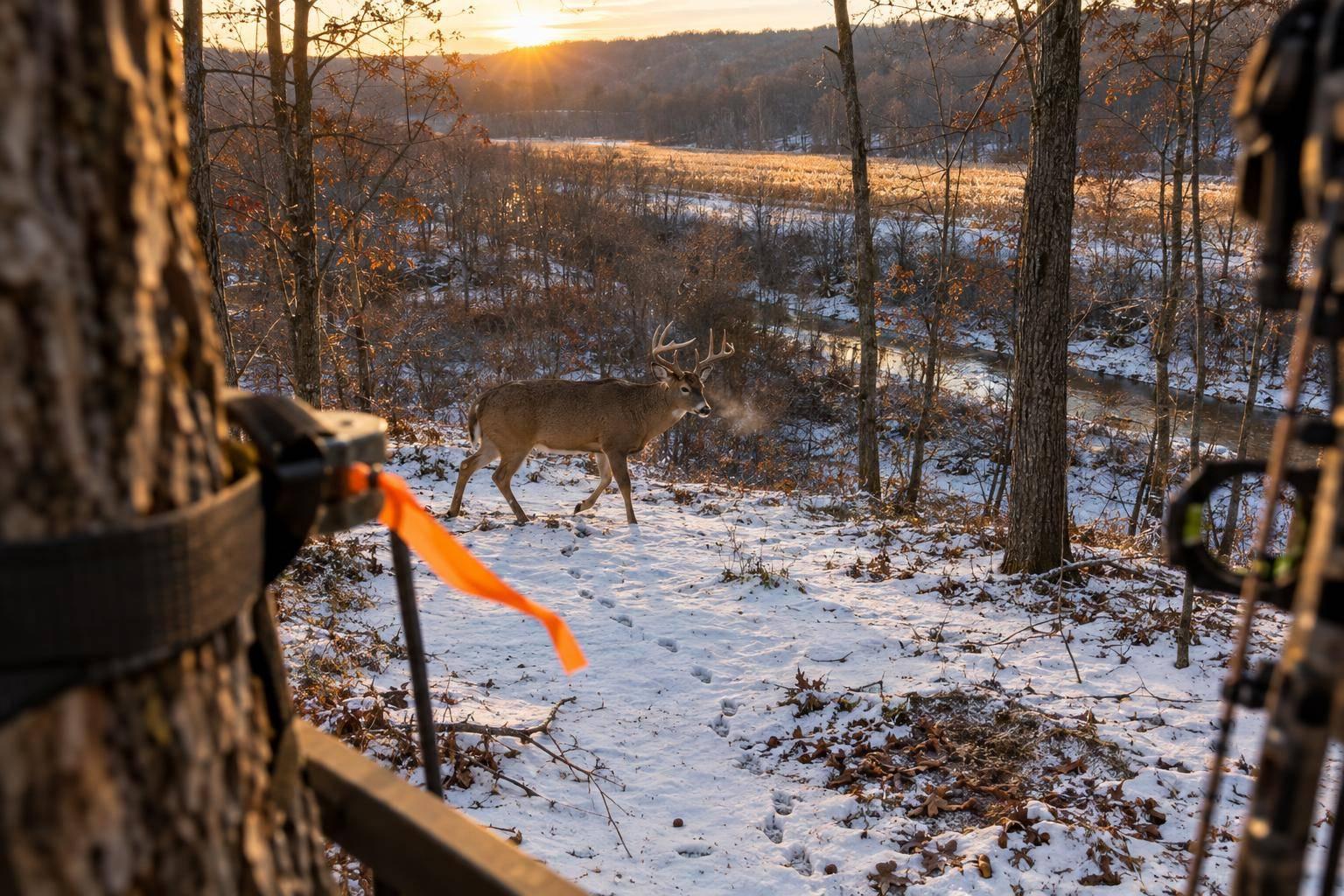
January is the perfect time for bowhunters in Kentucky to target deer in "green tunnels" – dense thickets of honeysuckle and greenbrier that provide food and shelter during winter. These areas stand out in the barren landscape and attract deer due to their high-protein forage and thermal cover. With most acorns gone and deer conserving energy post-rut, their movements become predictable, cycling between bedding and these food-rich zones.
Key takeaways for successful January hunts:
- Focus on green tunnels: Honeysuckle and greenbrier thickets are deer magnets.
- Scout for browse pressure: Look for nipped twigs, stripped leaves, and uniform feeding heights.
- Hunt edges, not interiors: Stay on the perimeter to avoid disturbing bedding areas.
- Plan low-impact access: Use quiet, downwind routes to avoid spooking deer.
- Leverage wind and thermals: Position yourself to keep your scent away from bedding zones.
With fewer hunters in the woods and deer concentrated around limited resources, this late-season strategy can lead to impressive results for those who plan carefully.
Green Tunnels and Late-Season Deer Behavior
What Green Tunnels Are
Green tunnels are a winter haven for deer, offering both food and shelter during harsh conditions. These areas rely on semi-evergreen plants like honeysuckle and greenbrier, often intertwined with cedar edges. Thanks to dew and natural insulation, these thickets maintain critical cover even in the coldest months. By January, they stand out vividly against the otherwise barren hardwood forest.
What makes green tunnels so effective is their dual purpose. Honeysuckle and greenbrier not only act as a protective barrier but also provide a steady food source. These dense tangles shield deer from the elements while offering reliable forage, allowing them to bed right within or near these areas. This setup reduces the need for deer to venture into exposed timber, making green tunnels a key factor in shaping late-season deer behavior.
How Late-Season Behavior Differs from the Rut
By January, deer behavior takes a sharp turn from the restless activity of the rut. During the rut, bucks roam extensively, scent-checking doe bedding areas and covering large distances in search of mates. But once January arrives, their focus shifts to one thing: survival. After burning through fat reserves during the rut, mature bucks now prioritize conserving energy.
"In January deer hunker down, especially when snow covers the ground and temperatures plummet. They bed up, and move around less. They don’t expend energy unless they have to."
– Art Lander Jr., Outdoors Editor
Deer movement becomes more deliberate, forming tight cycles between bedding and food sources. As Josh Honeycutt explains, "To conserve energy, whitetail metabolisms are slowing down, and so deer are moving less. They’re bedding very close to the best food sources they can find". Recognizing these changes is crucial for taking advantage of green tunnels during this time.
Why January Works for Hunting Green Tunnels
The reduced movement and focused foraging habits of deer in January make the remaining food sources even more important. By mid-January, most white oak and red oak acorns are depleted, forcing deer to rely on other available forage. Add to this the decreased hunting pressure and Kentucky’s extended 136-day archery season, and you’ve got a prime opportunity for late-season hunting.
The statistics back this up. Between 2006 and 2015, Kentucky’s January archery harvest saw a 54.25% increase, climbing from 1,507 deer to 3,294. With deer concentrated around limited food sources, fewer hunters in the woods, and a longer season, green tunnels become one of the most reliable setups for winter hunting success.
How to Hunt Late Season (848)
Finding Green Tunnels and Reading Browse Activity
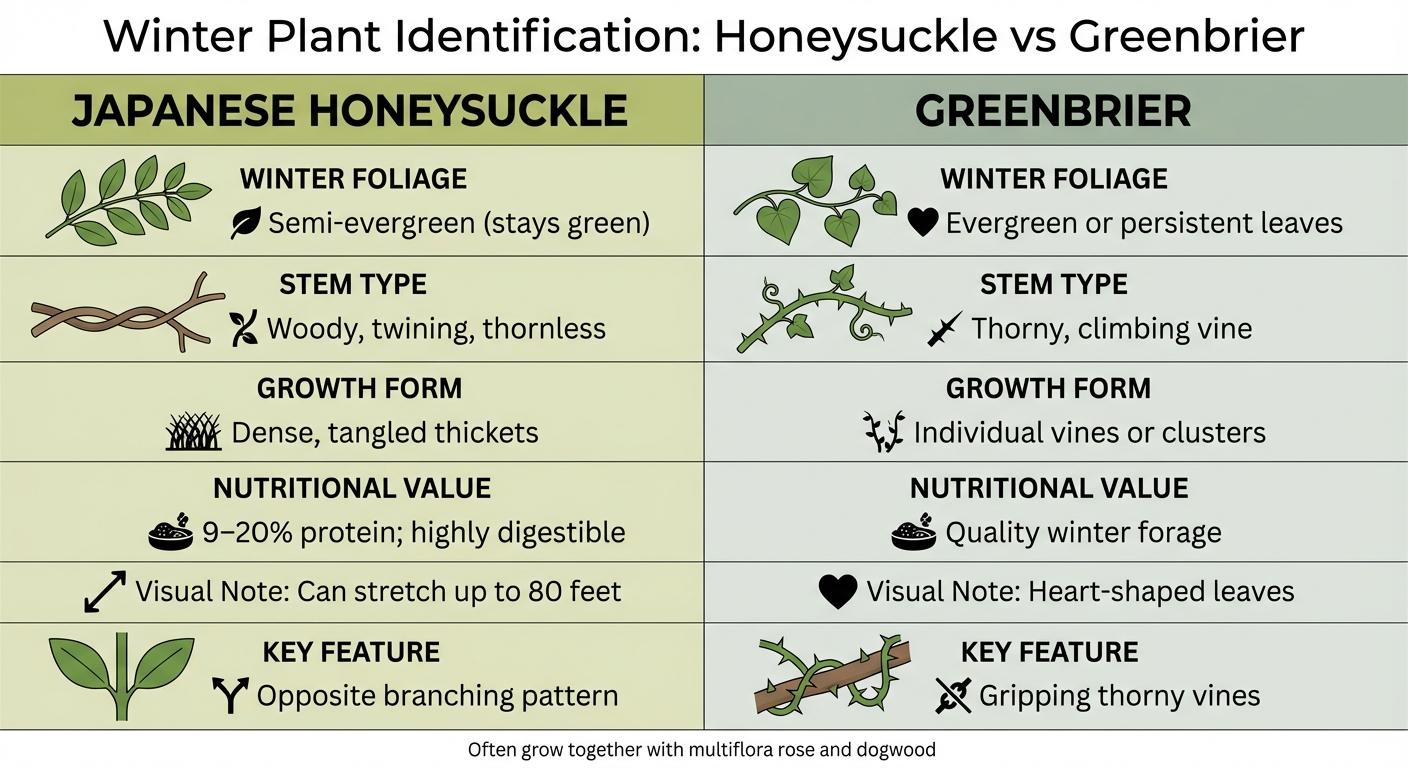
Japanese Honeysuckle vs Greenbrier Winter Identification Guide for Deer Hunters
Identifying Honeysuckle, Greenbrier, and Other Vines
Winter plants have unique traits that make them easier to spot. Japanese honeysuckle is a standout – it stays green even during the colder months. Look for its woody, twining stems with opposite branching, which form dense, tangled thickets. These vines can stretch up to 80 feet, creating a nearly impenetrable cover.
Greenbrier is another key player in Kentucky’s green tunnels. Its thorns and heart-shaped evergreen leaves make it easy to identify. Unlike the smooth stems of honeysuckle, greenbrier climbs with thorny, gripping vines. These two plants often grow together, alongside multiflora rose and dogwood, forming layered cover that deer prefer.
| Feature | Japanese Honeysuckle | Greenbrier |
|---|---|---|
| Winter Foliage | Semi-evergreen (stays green) | Evergreen or persistent leaves |
| Stem Type | Woody, twining, thornless | Thorny, climbing vine |
| Growth Form | Dense, tangled thickets | Individual vines or clusters |
| Nutritional Value | 9–20% protein; highly digestible | Quality winter forage |
Once you’ve identified these plants, check for signs of deer activity to confirm their use.
Recognizing Deer Browse Pressure
Deer leave behind clear signs when feeding. Look for nipped twig tips, stripped leaves, and bite marks at a uniform height – typically around 5 to 6 feet. A noticeable browse line indicates heavy and repeated feeding.
Pay attention to consistent damage on multiple stems at the same height. This points to regular visits. In winter, deer also strip bark from hardwood trees and shrubs mixed within the thickets to supplement their diet. Once you spot these signs, you can start mapping out the areas for better scouting.
Mapping Winter Browse Patterns
Aerial imagery and topographic maps are great tools for finding green tunnels. Combine plant identification with browse evidence to locate prime areas. Focus on features like south-facing slopes, which get more sunlight, encouraging vine growth and providing thermal shelter for deer. Leeward ridges that block wind, creek bends with thick vegetation, and old home sites or pastures overtaken by honeysuckle and greenbrier are also worth marking.
"Note areas that have grown out of reach for deer foraging. Mark the sites with flagging or store the info in a mobile hunting app."
– Tes Randle Jolly, Author and Wildlife Photographer
Pay special attention to terrain features like forest edges, fencerows, field borders, and the junctions of drainages – these natural funnels often concentrate deer movement. Use a hunting app to record coordinates during your winter scouting trips, so you can revisit these promising spots where green vines stand out against the dormant landscape.
Green Tunnel Hunting Tactics and Edge Setups
Why Edges Beat Interior Setups
Honeysuckle thickets can be a hunter’s nightmare – dense vines and small trees make it nearly impossible to find clear shooting lanes or set up a treestand. That’s why focusing on the edges is such a smart move. Staying on the perimeter keeps you out of the core bedding area, protecting your scent trail and minimizing disturbance to the deer. Plus, mature bucks often patrol these edges, scent-checking for does, which makes them prime spots for intercepting movement.
"This thicket does not provide a tree big enough to support a tree stand. So, we have had to hunt the fringes of the thicket itself, setting up over the primary trails leading into and out of the area deer are bedding in." – Zach Jumps, Heartland Lodge
Hunting these edges also gives you the chance to shape deer movement. By clearing a wide trail for does and a narrower sneak trail for bucks, you can funnel them into your shooting range.
Key Edge Features to Target
Focus on features that naturally guide deer along predictable paths, like inside corners, ditch crossings, or fence gaps. These spots act as natural funnels, increasing your chances of a close encounter.
Pay special attention to south-facing slopes in January. Deer gravitate to these areas to escape cold north winds and soak up sunlight while staying near green food sources. Position your stand on the downwind side of these slopes to catch bucks scent-checking the area without risking exposure to the thicker bedding zones.
For example, in October 2024, Zach Jumps from Heartland Lodge used a brush hog to carve out two trails in a 10-acre thicket: a 4-foot-wide trail for does and a narrow 2-foot sneak trail for bucks. By setting up on the downwind edge during a northwest wind, he successfully harvested a 5.5-year-old buck at just 18 yards as it used the sneak trail to scent-check the doe trail.
Once you’ve pinpointed these edges, planning an efficient route to scout them becomes essential.
Building a Green Pocket Route for Scouting
A Green Pocket Route links 6–10 key thicket edges in a single, downwind loop, allowing you to scout quickly and quietly without overpressuring the area. The best times to scout are during damp conditions or after snowfall when your movements are quieter. Instead of walking through the edges, use binoculars to observe from a distance.
As you scout, mark high-value features like south-facing slopes, leeward ridges that block wind, and natural funnels such as ravines where deer avoid steep climbs. Keep an eye out for narrow "sneak trails" running parallel to main doe trails – these are often used by mature bucks while scent-checking.
Access, Wind, and Shot Execution in Thick Cover
Low-Impact Access Planning
Getting to your stand without alerting deer is just as important as picking the right spot. Steer clear of deer travel routes and avoid walking along ridgelines where your scent can spread easily. Use natural cover and less obvious paths to stay hidden during your approach.
January hunts often call for an afternoon-only strategy. By morning, deer are usually bedded in thermal cover, so heading in later in the day minimizes the chance of spooking them. If you can slip into a thicket without spreading scent across their travel paths, you’ve set yourself up for an ideal ambush. These careful access strategies naturally complement stand placement that aligns with wind and thermal patterns.
Wind and Thermal Rules for Thicket Hunting
Thermals and wind direction can make or break your hunt. In the morning, rising thermals carry scent uphill, especially on south- and east-facing slopes. In the evening, as the air cools, thermals shift downward, pushing scent into low-lying areas. Position your stand where these shifts will pull your scent away from bedding zones.
One rule you can’t ignore: if the wind is blowing straight into the thicket, don’t hunt it. Deer have an incredible sense of smell – on calm, mild days (50–70°F with low humidity), they can pick up human scent from up to half a mile away. If the wind is marginal, consider hanging your stand higher, around 17–20 feet or more, to help carry your scent above a deer’s range. Once you’ve tackled the challenges of access and wind, the next step is making the shot count in thick cover.
Shot Selection and Gear for Thick Cover
In dense cover, focus on creating one narrow shooting lane at a range of 20–30 yards. Keep clearing to a minimum and use quiet tools to ensure the natural environment remains undisturbed. It’s helpful to have one person in the stand and another on the ground to avoid overclearing – mature bucks are quick to notice even small changes in their surroundings.
Train yourself to pick out subtle details, like the horizontal line of a deer’s back, the flicker of an ear, or the glint of an antler, rather than waiting to see the entire animal. If a deer enters your shooting lane, a soft grunt can help stop it for a clean shot. Aim for the lower third of the vital area to compensate for the deer’s natural reaction to drop at the sound of the shot.
Conclusion
Hunting Kentucky’s honeysuckle hideouts in January boils down to three main strategies: find the green, hunt the edges, and stay invisible. During the harsh winter months, these patches of vibrant greenery become magnets for deer, making them prime hunting spots. Time and again, success stories from these setups highlight their importance.
To make the most of these opportunities, you need to combine stealth with careful planning. How you approach the area can make or break your hunt. Late-season deer are notoriously skittish – "jitterier than field mice" after enduring months of hunting pressure. A single misstep can turn a promising green thicket into a barren no-go zone. Stick to afternoon hunts, use quiet entry routes that avoid crossing major deer trails, and always position yourself downwind of the thicket. As Zach Jumps from Heartland Lodge advises:
"If you believe a specific buck is using a thicket as his dominant bedding area, you have to be extremely cautious hunting them. You may only get one opportunity…"
January bowhunting isn’t about covering lots of ground or chasing fresh scrapes. It’s about precision. Focus on locating high-probability green pockets, plan your access routes with care, and only strike when the wind is in your favor. Bucks, having lost up to 25% of their body weight during the rut, conserve every bit of energy they have left. By targeting the edges and letting the scarcity of winter forage guide your approach, you can turn these limited opportunities into successful hunts. Use these strategies to navigate Kentucky’s winter hunting challenges with confidence.
FAQs
Why are honeysuckle and greenbrier thickets great for deer hunting in January?
Honeysuckle and greenbrier thickets are top-notch hunting spots in January. Why? They offer deer exactly what they need during winter: food and cover. Honeysuckle provides tender, nutrient-packed leaves that keep deer nourished when other food sources are scarce. Meanwhile, greenbrier’s thick, tangled vines create a safe, protective shelter. Together, these thickets become a go-to spot where deer can feed, rest, and stay hidden from predators.
During winter, deer often gather in these areas, especially on leeward, south-facing slopes. These spots not only shield them from biting winds but also form predictable travel routes – like edges, fence openings, or ditch crossings. For hunters, this predictability is gold. By positioning yourself along these paths, you can anticipate deer movement and set yourself up for a well-placed shot.
How can hunters scout and identify deer activity in Kentucky’s green tunnels during January?
To navigate Kentucky’s winter "green tunnels" successfully, hunters should concentrate on areas that bring together food, cover, and natural travel paths. Start by examining aerial maps or topographic tools to pinpoint promising spots like south-facing slopes, leeward ridges, creek bends, or old home sites where plants like honeysuckle and greenbrier are abundant.
When scouting on foot, keep an eye out for browse pressure – evidence such as nipped plant tips, stripped leaves, or consistent bite marks, which clearly indicate deer activity. Being able to identify key plants is crucial: honeysuckle is recognized by its opposite-paired leaves and fragrant flowers, while greenbrier stands out with its thorny, hollow stems and compound leaves. Focus on these plants since deer prefer them over less appealing vegetation.
Set up trail cameras along natural funnels where deer are likely to move, such as inside corners, ditch crossings, or gaps in fences. Avoid placing cameras deep within dense interiors where visibility and shot opportunities are limited. Additionally, plan your access routes to stay downwind and minimize any disturbances to the deer’s habitat. By combining smart mapping, plant identification skills, and strategic edge setups, hunters can effectively track deer activity during January’s late-season conditions.
How can I access hunting areas without alerting deer?
To get to your hunting spot without alarming deer, it’s all about planning your approach with care. Here are some tried-and-true strategies to help you stay under the radar:
- Use maps to your advantage: Study topographic and aerial maps to pinpoint features like south-facing slopes, creek bends, or old homesteads overgrown with vines. Plan routes that steer clear of deer travel paths and avoid crossing ridges where you might be silhouetted against the sky.
- Play the wind: Always stay downwind so your scent doesn’t drift into the area you’re hunting. If the wind is blowing toward your target spot, it’s best to rethink your approach.
- Move quietly: Step on soft surfaces like moss or pine needles to muffle noise, especially when the ground is crunchy. In snowy or damp leaf-covered areas, the natural quiet can let you move a bit quicker without drawing attention.
- Scout smart: Plan a route that allows you to check several promising spots efficiently. Avoid lingering too long or disturbing the prime areas you intend to hunt.
By following these steps, you’ll keep your presence subtle and improve your odds of spotting deer during daylight hours.