When choosing between carbon and stainless steel broadheads, it boils down to sharpness, durability, and maintenance. Carbon steel broadheads are sharper and hold their edge longer, but they rust easily and require regular upkeep. Stainless steel broadheads resist rust, are easier to maintain, and perform well in wet conditions, but they’re typically less sharp and more expensive upfront.
Key Takeaways:
- Carbon Steel: Razor-sharp, better edge retention, affordable, but prone to rust and brittle on heavy bone impacts.
- Stainless Steel: Rust-resistant, low maintenance, durable, but harder to sharpen and costlier.
Quick Comparison:
| Feature | Carbon Steel | Stainless Steel |
|---|---|---|
| Sharpness | Superior, holds edge longer | Good, but less sharp overall |
| Rust Resistance | Poor, rusts quickly | Excellent, resists moisture |
| Maintenance | High, needs oiling and care | Low, rinse and store easily |
| Durability | Hard but brittle on impact | Tough, absorbs impacts better |
| Cost | Lower upfront | Higher upfront |
For humid climates during ultimate whitetail hunts in Kentucky, stainless steel broadheads are a practical choice due to their rust resistance. However, if sharpness and cost are priorities, carbon steel may suit you better, provided you’re willing to maintain them diligently.
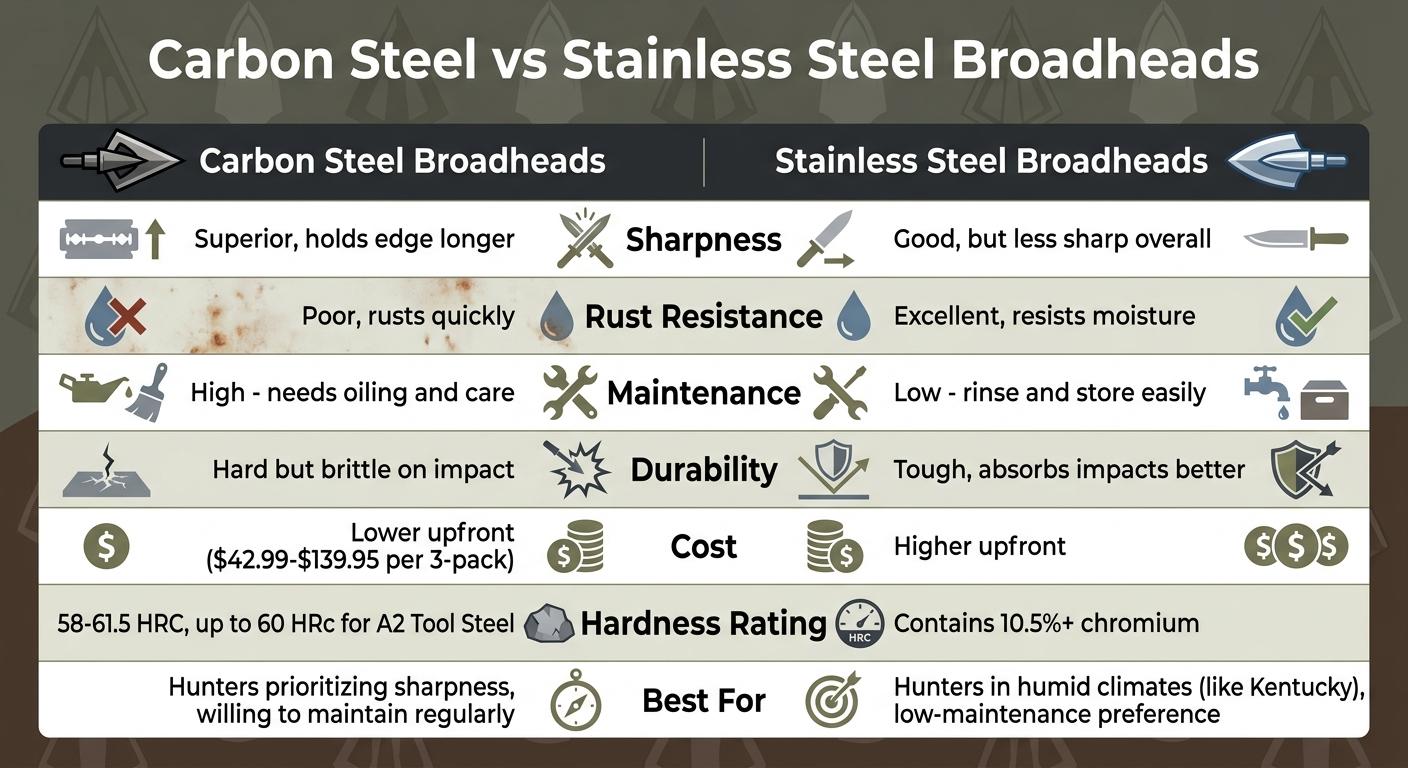
Carbon Steel vs Stainless Steel Broadheads Comparison Chart
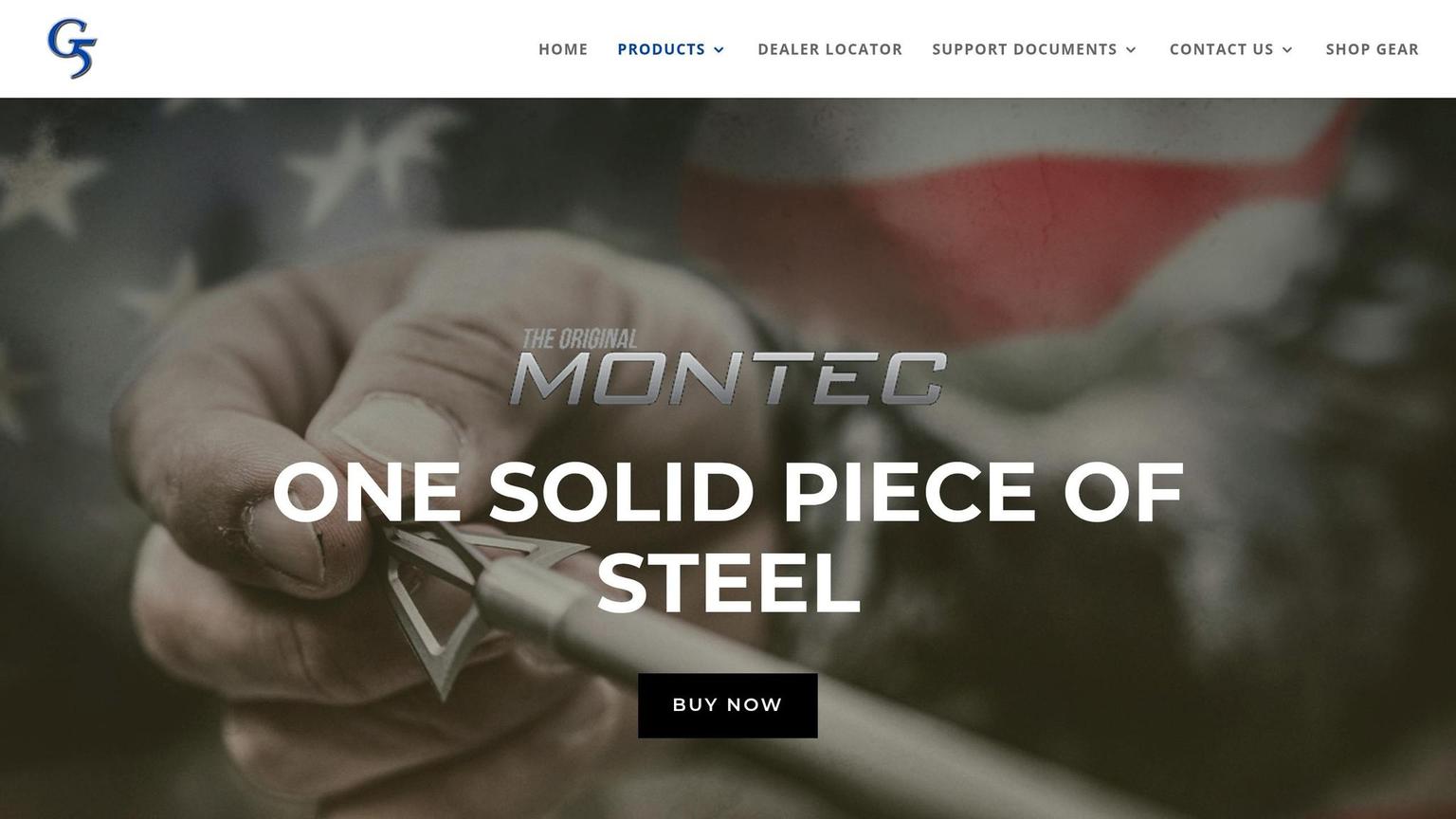
G5 Montec CS! Are they better than the G5 Montec Standards?
Carbon Steel Broadheads: What They’re Made Of
Carbon steel is essentially iron with a carbon content ranging from 0.02% to 2.1%, without significant alloying elements. For high-carbon broadheads, the carbon content typically falls between 0.6% and 1.0% – a sweet spot for keeping a razor-sharp edge. This sharpness and wear resistance come from iron carbides, also known as cementite (Fe₃C). Most carbon steel broadheads are hardened to a range of 58–61.5 HRC, which helps them maintain that fine edge.
Metallurgist Larrin Thomas provides this insight:
Carbon steels are those that have primarily carbon added to them… In general, higher carbon steels have higher edge retention but lower toughness.
Carbon steel’s coarser grain structure contributes to what experts describe as a more "aggressive" cutting performance. This means cleaner cuts and better blood trails in hunting scenarios. Another advantage? Since carbon steel lacks the hard carbides found in stainless or "super steels", it’s much easier to sharpen. Standard aluminum oxide stones can bring back its edge without needing specialized diamond abrasives. These features define both its strengths and its limitations in the field.
Benefits of Carbon Steel Broadheads
One standout advantage of carbon steel broadheads is their ability to achieve exceptional sharpness. Thanks to their rigidity and higher hardness, they can hold a finer edge compared to stainless steel. This sharper edge reduces the force required to penetrate an animal, slicing through tissue with ease and improving both penetration and blood trails. For example, premium broadheads made from A2 Tool Steel can hit 60 HRc on the Rockwell scale.
Another perk is cost. Since carbon steel is made from simple iron and carbon, it’s more affordable than stainless steel, which relies on pricier elements like chromium and nickel.
Drawbacks of Carbon Steel Broadheads
Despite their cutting power, carbon steel broadheads come with some downsides. Rust is a major issue – carbon steel oxidizes quickly, even with minimal moisture exposure. Unlike stainless steel, which forms a protective chromium oxide layer, carbon steel requires vigilant maintenance. After use, it’s essential to rinse, dry thoroughly, and lightly oil your broadheads. Applying a protective coating can also help prevent rust and discoloration.
Another drawback is brittleness. The same hardness that delivers a sharp edge also makes the steel more prone to chipping or breaking, especially on impact with bone. As TSPROF explains:
The higher the carbon content, the harder but more brittle the steel is.
This brittleness can be a problem in real-world scenarios. For instance, in durability tests involving cattle ribs, only 40% of fixed-blade broadheads emerged without damage, showing the potential for structural failure during bone impacts.
Lastly, carbon steel broadheads require more upkeep. Unlike stainless steel, which resists scratches and environmental wear, carbon steel demands regular care to prevent degradation. In acidic environments, such as those encountered in the field, non-stainless steels like 1095 can lose sharpness significantly after just 300 minutes, while stainless steels remain largely unaffected.
Stainless Steel Broadheads: What They’re Made Of
Stainless steel broadheads owe their durability to the inclusion of at least 10.5% chromium by mass. This chromium reacts with oxygen to form a thin layer of chromium oxide, which acts as a shield, protecting the steel from moisture and other environmental damage.
High-quality stainless steel broadheads often use advanced knife steels like S30V, which are prized for their ability to hold an edge. Generally, stainless steels have a low carbon content, usually less than 1.2% by mass. Additional elements such as molybdenum and nitrogen are incorporated to enhance the protective layer and boost resistance to corrosion and pitting.
This combination of properties makes stainless steel broadheads a solid choice for hunters who frequently encounter wet conditions or want equipment that requires little maintenance. Metallurgist Larrin Thomas explains the science behind it:
When sufficient chromium is added then a chromium oxide passive layer forms which protects the steel from corrosion in a similar way to a metal like aluminum with its own aluminum oxide layer.
Understanding this composition helps clarify why stainless steel performs so well in the field but also highlights some of its limitations.
Benefits of Stainless Steel Broadheads
One of the standout advantages of stainless steel is its resistance to rust. While carbon steel can start to oxidize with even minimal exposure to moisture, stainless steel holds up in humid, wet, or otherwise corrosive environments without deteriorating. This makes it a dependable choice for hunting in rainy weather or near water.
Another benefit is the low maintenance required. For instance, the Day Six Evo 2, crafted from S30V, resists rust without requiring additional protective coatings. This ease of care is especially valuable for hunters on extended trips or those storing their broadheads for long periods between hunts.
Stainless steel also retains its appearance and strength over time. Some designs, like the SEVR 2.0, pair stainless steel blades with grade-5 titanium ferrules. This combination balances durability and weight, offering what many reviewers describe as a powerful impact on game animals.
In terms of sharpness, stainless steel broadheads can perform exceptionally well. The Day Six Evo 2, for example, measured 150 grams on an edge tester, which places it in the same sharpness category as a razor blade – well below the industry standard of 400 grams. This proves that stainless steel can achieve a fine edge while still resisting corrosion.
Drawbacks of Stainless Steel Broadheads
Despite their many advantages, stainless steel broadheads come with a few downsides. For one, they don’t quite reach the extreme sharpness levels of high-carbon steel, and some grades of stainless steel are harder to sharpen to a precise edge. The presence of large chromium carbides in certain stainless steels enhances wear resistance but makes field sharpening more challenging compared to simpler carbon steels.
Another concern is brittleness, especially in high-hardness variants. Experienced bowhunter Aron Snyder points out:
S30V is known for its edge retention and corrosion resistance, but it’s also known to be brittle steel that’s prone to chip in rough use.
He further notes:
The only downside of the Day Six is the steel can be brittle, but they’re a very good head.
This brittleness means that stainless steel broadheads can chip or even break when they strike hard bone, despite their excellent corrosion resistance.
Lastly, cost is a factor. Stainless steel broadheads are generally more expensive than their carbon steel counterparts due to the cost of materials like chromium, nickel, and manganese. For example, while budget-friendly options like the Magnus Black Hornet are priced around $40, premium models made with materials like S30V are significantly more expensive.
How They Compare in Real Hunting Situations
When hunting in Kentucky’s humid conditions, the material of your broadhead plays a major role in performance. Both carbon steel and stainless steel have their own strengths, which become clear once the arrow is released.
Sharpness and Maintenance
Carbon steel stands out for its razor-sharp edge, thanks to its finer grain structure. This sharpness allows for clean, precise cuts, making it a favorite for hunters who prioritize initial cutting efficiency. However, the trade-off is that carbon steel requires more frequent sharpening to maintain its edge. On the other hand, stainless steel, with its coarser grain structure, retains a consistent edge for longer periods and demands less upkeep.
In Kentucky’s humid environment, carbon steel dulls and rusts more quickly. To keep it in top shape, applying a light, food-safe oil and using fine honing tools – like a gentle ceramic or fine steel rod – is essential. For stainless steel, diamond or ceramic rods work best for sharpening.
While sharpness is critical, the ability to handle impacts with hard bones is equally important.
Toughness and Bone Impact Resistance
A broadhead’s durability is tested when it hits bone. High-end carbon steel, such as A2 tool steel, is designed to combine hardness for edge retention with toughness to handle high-speed bone impacts. As Iron Will Outfitters explains:
A2 has a unique combination of high hardness for edge retention and sharpness along with high impact toughness for high speed bone impacts.
However, carbon steel has a drawback – its brittleness. When it fails, it tends to chip or break rather than bend. In contrast, stainless steel is more ductile. It absorbs impacts by deforming rather than shattering, making it more forgiving in situations like hitting a shoulder blade at an awkward angle.
Field tests have shown that both types of broadheads can fail under extreme conditions. Charles Hart, owner of Hart Farms Processing in Almo, Kentucky, shares his observations:
We find anywhere from 10 to a dozen mechanicals every year [stuck in deer shoulders], but only occasionally will we find a fixed head. Usually, if it is a fixed broadhead, it’s there because of a terrible shot.
These factors – sharpness, maintenance, and impact resistance – are key to choosing the right broadhead for successful hunts in Kentucky’s challenging conditions. For personalized gear recommendations, you can connect with a Kentucky hunting guide to discuss your specific setup.
Maintenance Needs and How Long They Last
Kentucky’s humid climate speeds up corrosion, making regular maintenance a must. Carbon steel broadheads require more attention, while stainless steel broadheads are much easier to manage.
Caring for Carbon Steel Broadheads in the Field
When using carbon steel broadheads, cleaning them immediately after each use is essential. Remove any debris and moisture, then dry them thoroughly to avoid oxidation. According to Benchmark Abrasives, carbon steel rusts quickly without a protective coating, so applying a light oil coating right after drying is crucial. If the blade gets scratched, the exposed metal will rust unless recoated immediately.
Caring for Stainless Steel Broadheads in the Field
On the other hand, stainless steel broadheads are far less demanding. A simple rinse with water is usually enough to clean off blood and dirt. Thanks to their chromium content – at least 10.5% by mass – stainless steel forms a protective oxide layer that resists rust, even in wet conditions. Hyde Tools highlights that stainless steel "retains its appearance and performance despite moisture or long-term storage". This low-maintenance quality makes stainless steel a great choice for hunters who value durability and convenience. If you’re ready to put your gear to the test, you can book a hunt in some of the state’s best deer territory.
Taking care of your broadheads not only extends their lifespan but also ensures they perform reliably in the field, which is an important factor when deciding between these materials.
Price Comparison and Long-Term Costs
Let’s dive into how upfront prices and long-term costs stack up when comparing carbon steel and stainless steel broadheads. Carbon steel broadheads generally have a lower initial price since they are simpler to machine and produce. On the other hand, stainless steel broadheads cost more upfront because they include additional alloying elements to resist corrosion. These price differences create an interesting dynamic when you look at specific examples.
For instance, budget-friendly options like the Magnus Stinger are priced at about $42.99 for a 3-pack. Compare that to premium carbon or tool steel heads, such as the Iron Will S Series, which cost around $139.95 per 3-pack.
However, the story doesn’t end with the sticker price. Over time, carbon steel broadheads often require recurring purchases of protective oils and cleaning supplies, especially if you hunt in humid conditions. Stainless steel broadheads, in contrast, typically need minimal maintenance – often just a quick rinse – saving you both time and money in the long run.
When it comes to performance over time, premium carbon steel options like the Cutthroat S7 (priced between $77.95 and $114.95 per 3-pack) are built to handle tough conditions, such as bone hits, and can be resharpened multiple times with basic stropping. On the flip side, many stainless steel models, like the Magnus Stinger, offer a lifetime warranty that covers issues like blade bending or breakage, effectively limiting replacement costs.
"If I was on a budget, the Stinger would be at the top of my list."
– Aron Snyder, Bowhunting Expert
For hunters who face wet weather or shoot frequently, stainless steel often proves to be the better long-term investment despite the steeper upfront cost. As noted by Excel Blades:
"Stainless steel has a higher upfront cost but may offer long-term savings due to its lower maintenance requirements and durability in harsh environments".
In real-world conditions, these cost differences can make a noticeable impact. If you’re willing to commit to regular upkeep, carbon steel’s edge retention and resharpening potential can deliver years of dependable performance. On the other hand, stainless steel’s durability and minimal maintenance make it a reliable choice for those who value convenience and longevity.
Which Material Works Best for Kentucky Whitetail Hunting
The humid weather and frequent rain in Northeastern Kentucky make choosing the right broadhead material essential for a successful hunt. During archery season, you’ll face everything from warm, muggy early-fall conditions to cold, damp days later on. In this environment, stainless steel broadheads are a reliable choice because they resist rust without requiring constant upkeep. On the other hand, while carbon steel broadheads offer sharper edges initially, they are prone to rust quickly in Kentucky’s humid climate.
Your hunting style also influences the best material for your setup. For crossbow hunters dealing with speeds exceeding 400 fps, broadheads need to handle high-impact energy. Materials like A2 tool steel, with hardness ratings up to 60 HRc, are tough enough to withstand impacts with heavy bones. Meanwhile, for traditional archery setups with lower kinetic energy, stainless steel’s flexibility is advantageous – it’s less likely to shatter and more likely to bend when hitting angled bones.
Maintenance habits also play a role in material selection. If you’re diligent about cleaning and oiling your broadheads, carbon steel can maintain an edge longer with proper care. However, if you’d rather avoid frequent maintenance, stainless steel is a more convenient, low-maintenance option.
Local hunters in Kentucky have observed that fixed-blade broadheads tend to perform better for whitetail hunting. According to local processors, fixed blades generally deliver the reliable penetration needed for Kentucky whitetails, while mechanical broadheads are more frequently recovered without full effectiveness.
For those booking hunts through Whitetail Hunting Kentucky, stainless steel broadheads are a practical choice. They eliminate worries about rust in Kentucky’s humid conditions, letting you focus on accurate shot placement and tracking deer movement.
Conclusion
Performance in the field depends on finding the right balance between edge retention, durability, and upkeep. Choosing between carbon steel and stainless steel comes down to sharpness versus convenience. Carbon steel is known for its excellent edge retention and strength, making it a top pick for tools that need to hold a razor-sharp edge. However, it’s highly prone to rust, even with minimal exposure to moisture. On the other hand, stainless steel, with at least 10.5% chromium content, offers outstanding resistance to corrosion and requires far less maintenance, making it a weather-friendly option.
Your hunting style and maintenance habits will guide your decision. If you’re committed to regular upkeep, like oiling your broadheads, and prioritize sharpness for precise, clean shots, carbon steel could be worth the effort. But if you’d rather avoid the hassle of constant maintenance and need gear that won’t rust in a humid environment, stainless steel is the practical choice – especially for Kentucky’s archery season. These factors play a key role in determining which material fits your needs best.
Environmental conditions and usage also influence the decision. For example, Kentucky’s humidity makes stainless steel’s corrosion resistance a major advantage, allowing you to focus on your hunt instead of your gear. While carbon steel is often less expensive, stainless steel’s durability and low-maintenance nature can offset the higher upfront cost over time.
There’s no universal "best" material – only the one that aligns with your specific requirements. Think about how often you hunt, your willingness to maintain your equipment, and the conditions you’ll encounter in the field. Both materials have their strengths and can deliver ethical, effective results when chosen to match the situation.
FAQs
How do I prevent carbon steel broadheads from rusting in humid weather?
To keep carbon steel broadheads rust-free in humid environments, start by cleaning them thoroughly after each use. Make sure they’re completely dry before applying a protective layer, such as oil or wax, to shield them from moisture. Store them in a cool, dry place, and consider adding silica gel packs to absorb excess humidity. Regularly check for any signs of rust to ensure they stay sharp and durable over time.
What’s the easiest way to sharpen stainless steel broadheads in the field?
The simplest way to sharpen stainless steel broadheads while out in the field is by using a mill file. Just slide the file along the blades at the proper angle, applying steady pressure to bring back their sharpness. This approach is easy to carry out, doesn’t require any fancy tools, and ensures your broadheads stay razor-sharp – perfect for on-the-go maintenance.
Which broadhead material handles bone hits better for whitetail hunting?
Stainless steel broadheads stand out when it comes to handling bone hits during whitetail hunting. Their resistance to corrosion and ability to maintain structural integrity upon impact make them a solid choice for penetrating dense bone. Thanks to their toughness and hardness, they’re less likely to deform or break, providing dependable performance even in challenging shots.