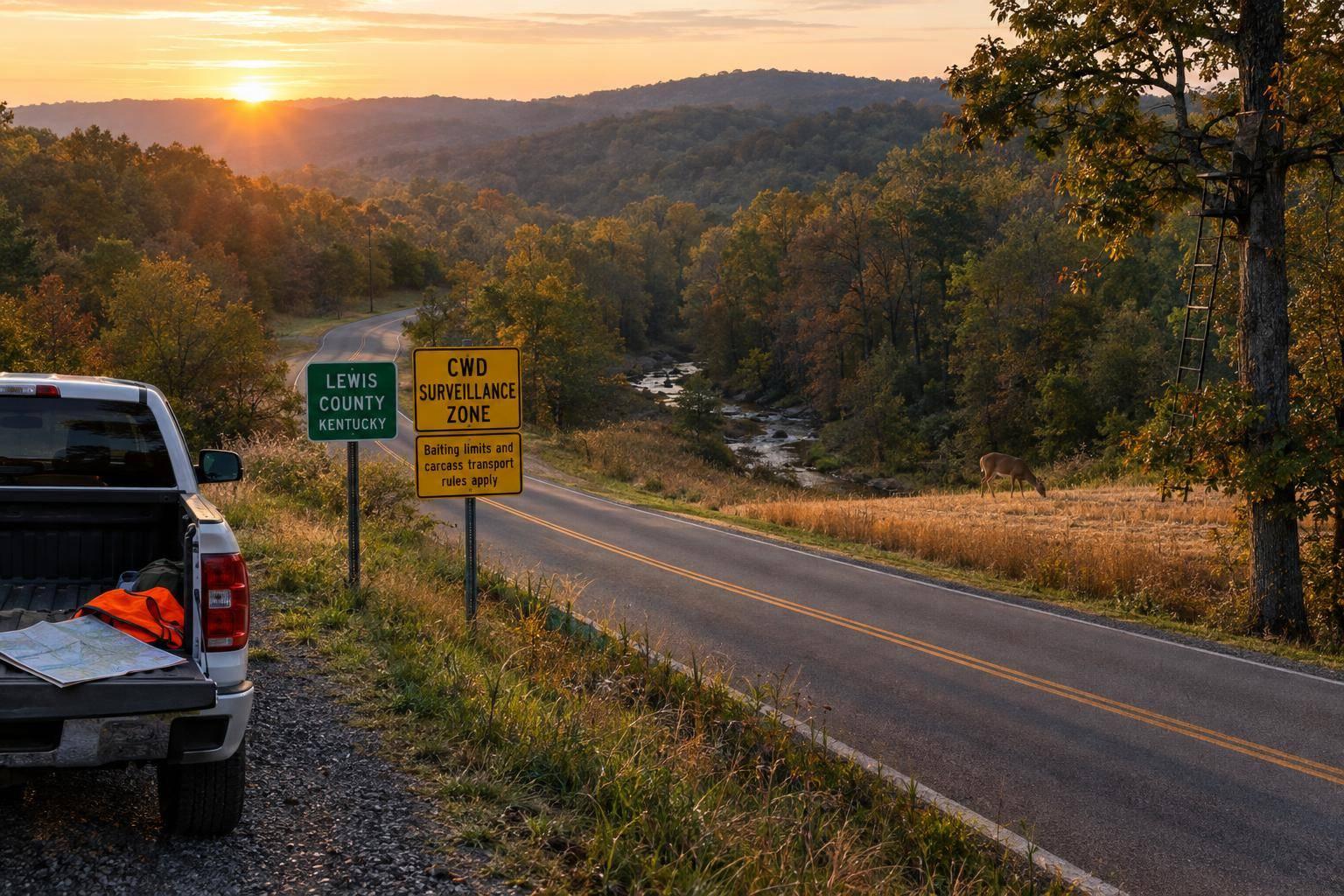
A deer can start losing meat quality within hours in warm September weather. If I want clean venison and no legal trouble during Ultimate Whitetail Hunts in Kentucky, I need to do 7 things right: check the harvest log, tag and report on time, set the deer in the right position, cut shallow, remove all organs and damaged tissue, cool the carcass fast, and haul it out without heat or dirt getting in the way.
Here’s the short version:
- Bring the right gear: sharp knife, gloves, paper towels, game bags, and a tarp
- Handle the legal step first: fill out the harvest log right away, report by midnight on harvest day or before processing
- Set the deer up right: on its back, hind legs spread, head slightly up, shade if possible
- Cut with control: keep cuts shallow and avoid the stomach, intestines, and bladder
- Clear the body cavity: remove the diaphragm, windpipe, bladder, debris, and bloodshot tissue
- Cool it fast: open the chest cavity and get air moving through it
- Transport it clean: keep it dry, shaded, and ventilated
- Check CWD and carcass transport rules: some Kentucky zones have transport limits
A few facts matter here. Kentucky requires harvest reporting by the end of the day, and warm early-season temperatures can spoil meat much faster than many hunters expect. That means the first minutes after recovery matter a lot.
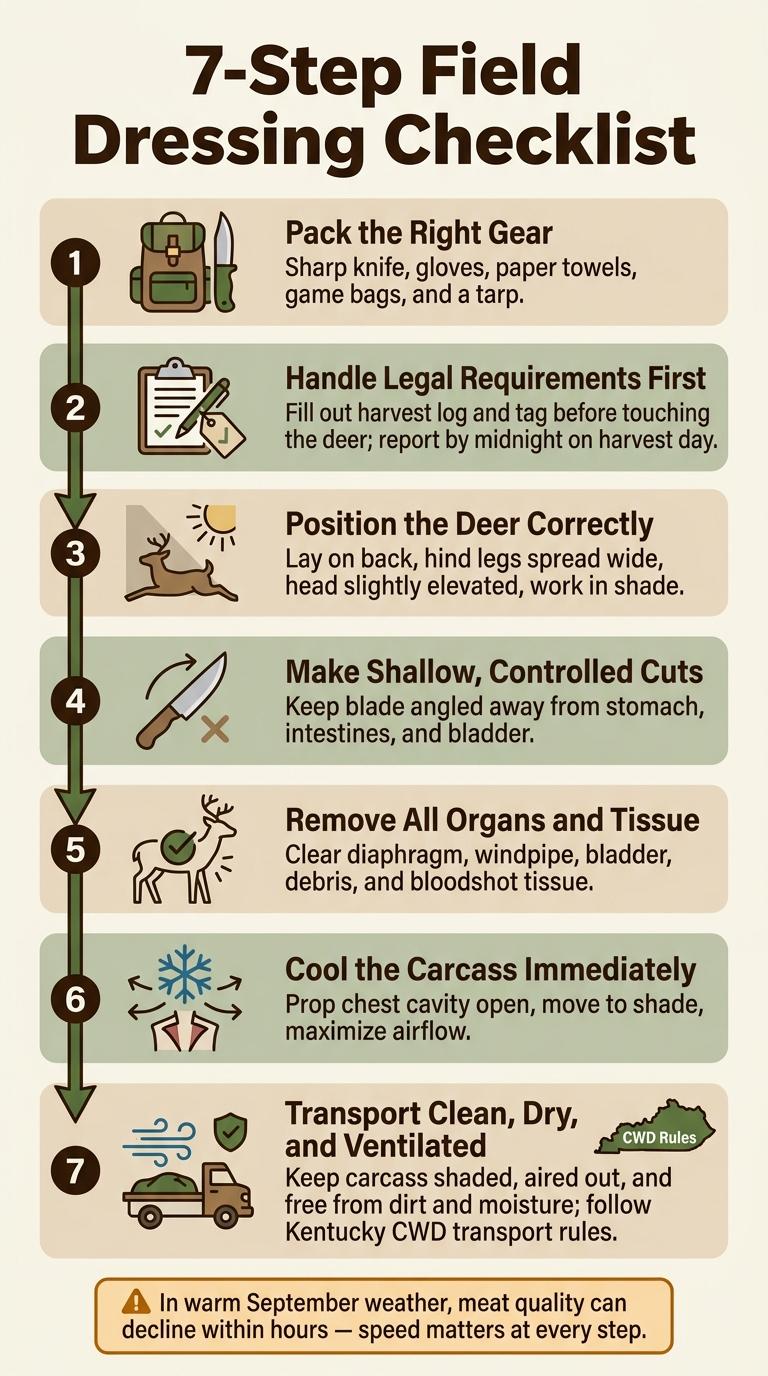
7-Step Field Dressing Checklist for Deer Hunters
7 Serious Field Dressing Mistakes on Whitetail Deer | The Advantage with Will Brantley
Quick Comparison
| Error to prevent | What I do instead | Why it matters |
|---|---|---|
| Dull knife or missing gear | Pack a sharp knife and basic field kit | Less mess, fewer slips |
| Skipping tag/legal check | Log and tag before moving the deer | Helps me stay within Kentucky rules |
| Poor body position | Lay deer on back, legs spread, head up | Better drainage and access |
| Deep cuts | Use shallow cuts | Lowers risk of gut or bladder puncture |
| Leaving tissue behind | Remove organs, debris, and bloodshot meat | Helps protect meat quality |
| Slow cooling | Open cavity and move to shade | Heat can spoil meat fast |
| Bad transport | Keep carcass clean, dry, and aired out | Lowers heat buildup and dirt contact |
Bottom line: I’m trying to avoid 7 simple mistakes that can cost meat quality or lead to rule violations.
The 7 field dressing errors to prevent
Start with the right gear, make the legal check, and set the carcass in the proper position. The order matters. First up: your knife and the rest of your kit.
1. Starting with a dull knife or missing gear
A dull knife takes more force to use, and that makes slips and punctures more likely.
Bring a sharp knife, gloves, paper towels, game bags, and a tarp. It’s a simple setup, but it makes the job cleaner and a lot safer.
| Item | Why It Matters |
|---|---|
| Sharp knife | Clean cuts; reduces organ puncture risk |
| Disposable gloves | Hygiene and protection from zoonotic diseases |
| Game bags | Protects meat from insects and dirt during transport |
| Tarp | Clean dressing surface in the field |
| Paper towels | Cleans the cavity and your hands |
2. Skipping the tag and legal check before handling the deer
Only approach after you’ve confirmed the deer is dead. Before you handle it, make sure your license, permits, and harvest tag are in order.
That step can feel easy to rush past, especially after a long wait and a shot on the ground. Don’t. Get the legal side squared away first, then move on.
Once the deer is legal and tagged, you can set up the body position.
3. Placing the deer in a poor position before opening the cavity
Position changes how well the carcass drains and cools. Lay the deer on its back and spread the hind legs wide. Lift the head a little so fluids drain out instead of running back into the cavity. If you can, work in the shade with good airflow.
A good setup makes that first cut cleaner and safer.
Clean cutting and full organ removal
With the deer in position, check two things next: blade control and complete organ removal.
4. Making deep cuts that puncture the stomach, intestines, or bladder
Use shallow cuts and keep the blade angled away from the stomach, intestines, and bladder.
5. Leaving behind the diaphragm, windpipe, bladder, bloodshot tissue, or debris
Remove the diaphragm, windpipe, bladder, and any tissue or debris. Trim bloodshot tissue around the wound channel to help protect meat quality. In CWD-positive areas, remove all meat, flesh, and tissue from the carcass before transport.
Once the cavity is clear, move right away to cooling.
Cooling and transport without ruining the meat
6. Letting the carcass stay warm too long
Once the cavity is cleared, start cooling the deer right away. Don’t wait around. Move it into the shade as soon as you can, then prop the chest cavity open so air can move through it.
Heat is the enemy here. The longer the carcass stays warm, the more the meat can suffer.
7. Transporting the deer in ways that trap heat or add contamination
After cooling begins, protect the carcass during transport. Use a method that keeps the deer clean, dry, shaded, and ventilated.
In plain terms, don’t haul it in a way that traps heat or lets dirt, moisture, or debris get on the meat. Keep the carcass shaded, ventilated, and clean the whole way out.
Conclusion: A short field checklist hunters can use on the spot
Here’s a quick field order you can use on the spot: sharp knife, tag and harvest report, flat ground, shallow cuts, full organ removal.
Start cooling the deer right away. Once that process begins, move it in a way that keeps air moving around the carcass and helps keep it clean. During transport, keep it clean, dry, shaded, and well-ventilated. Before you leave the area, follow Kentucky's CWD carcass transport rules.
FAQs
How quickly should I field dress a deer in warm weather?
In warm weather, field dress your deer as quickly as possible once you've confirmed the harvest. Heat can spoil meat fast.
Field dressing soon after the shot helps the carcass cool down by removing the internal organs and letting body heat escape. That goes a long way toward keeping your venison in good shape.
What should I do if I puncture the stomach or bladder?
Stay calm and move fast to help stop the spread of contamination. Pull the punctured organ away from the carcass right away so less material leaks onto the meat.
Next, trim away any meat that had direct contact with stomach contents or urine. Cut deep enough to remove all tainted tissue, not just the surface. Then rinse the carcass well with clean water.
How do Kentucky CWD transport rules affect me?
The Kentucky CWD Surveillance Zone limits which carcass parts can leave the zone. Field dressing alone doesn’t make a whole carcass legal to move. Check the current zone, transport and sampling requirements for your harvest location and date with the Kentucky Department of Fish and Wildlife Resources.
Staying informed matters when you’re handling game, and Kentucky Deer Outfitters is committed to helping you understand the requirements during your guided hunt.