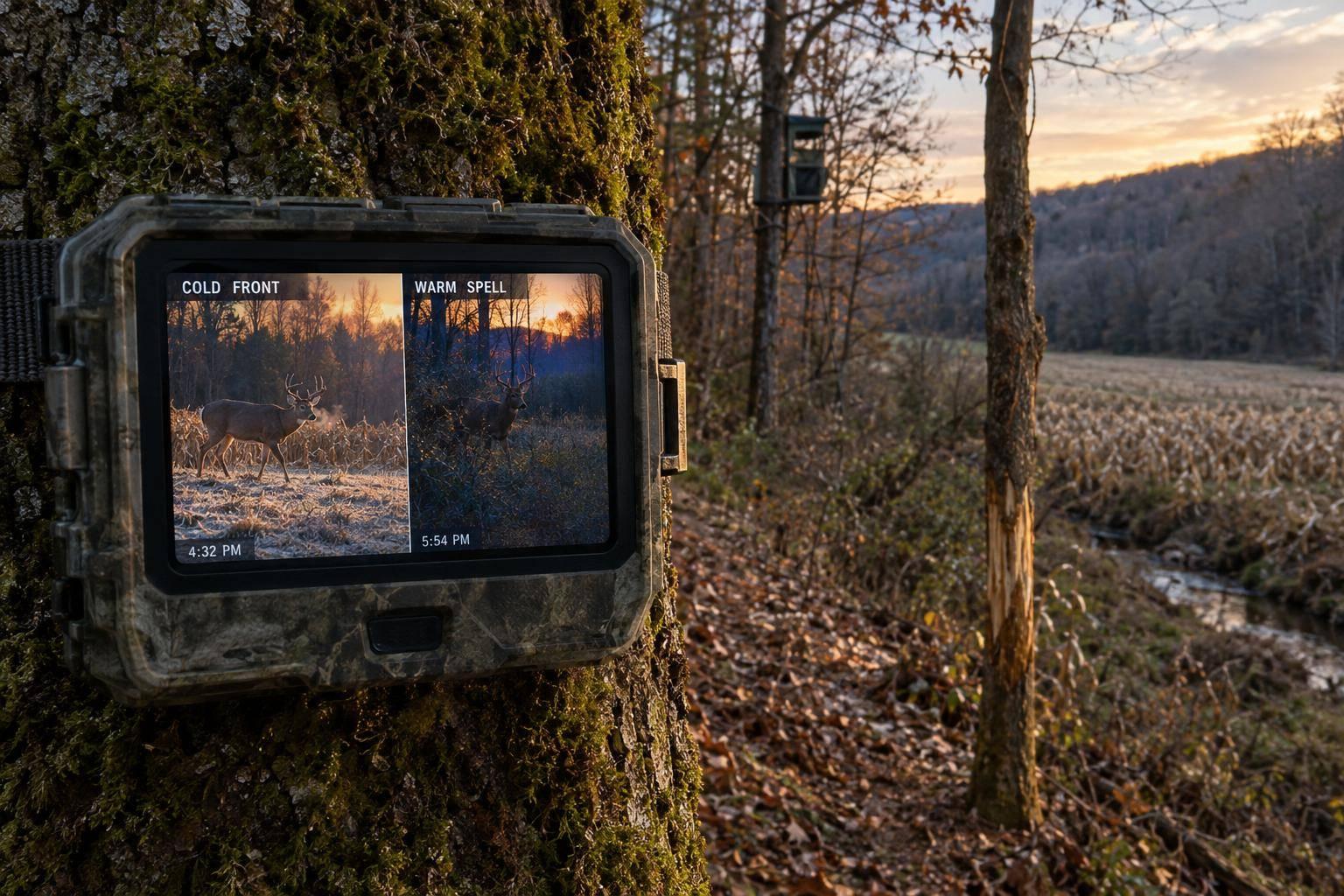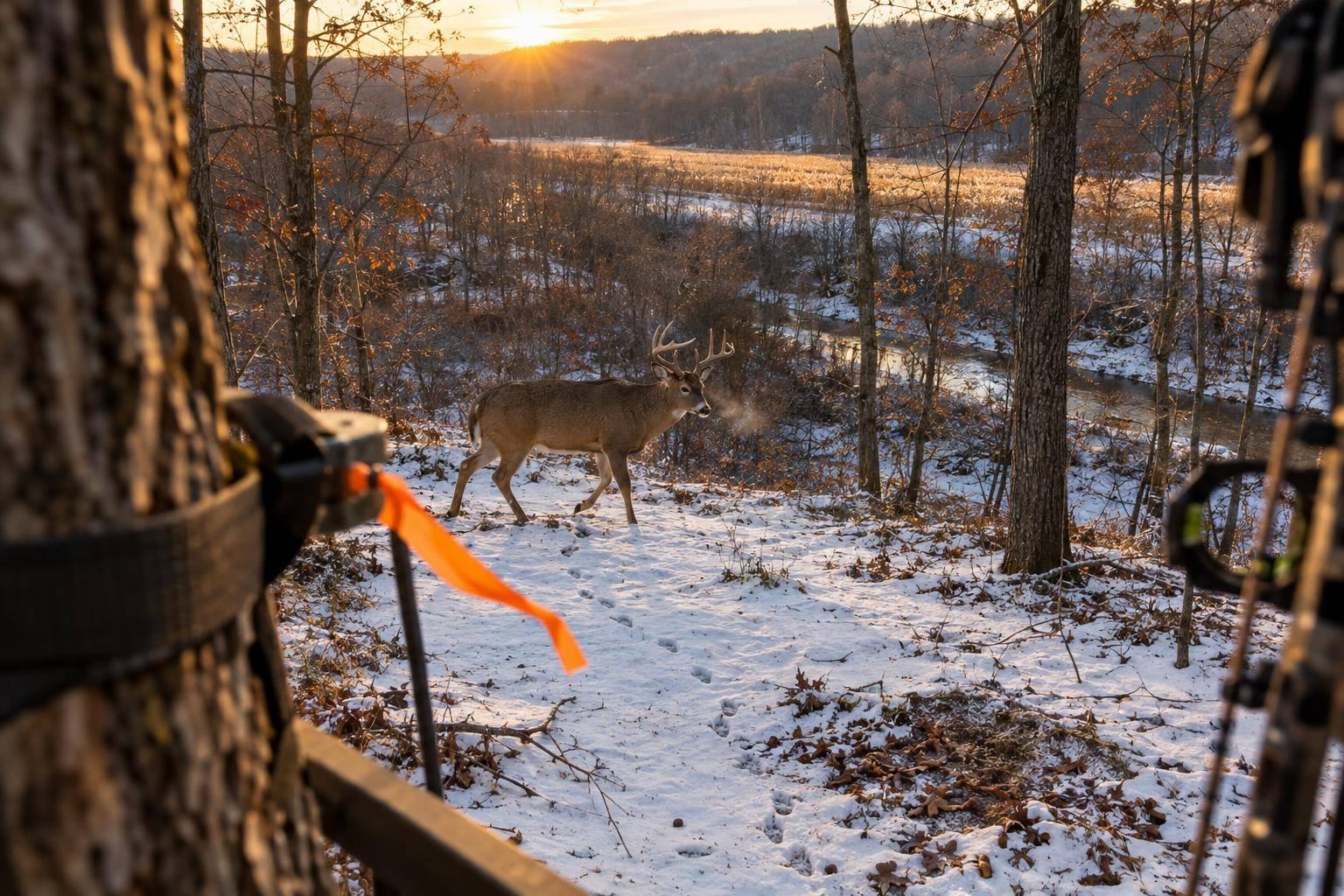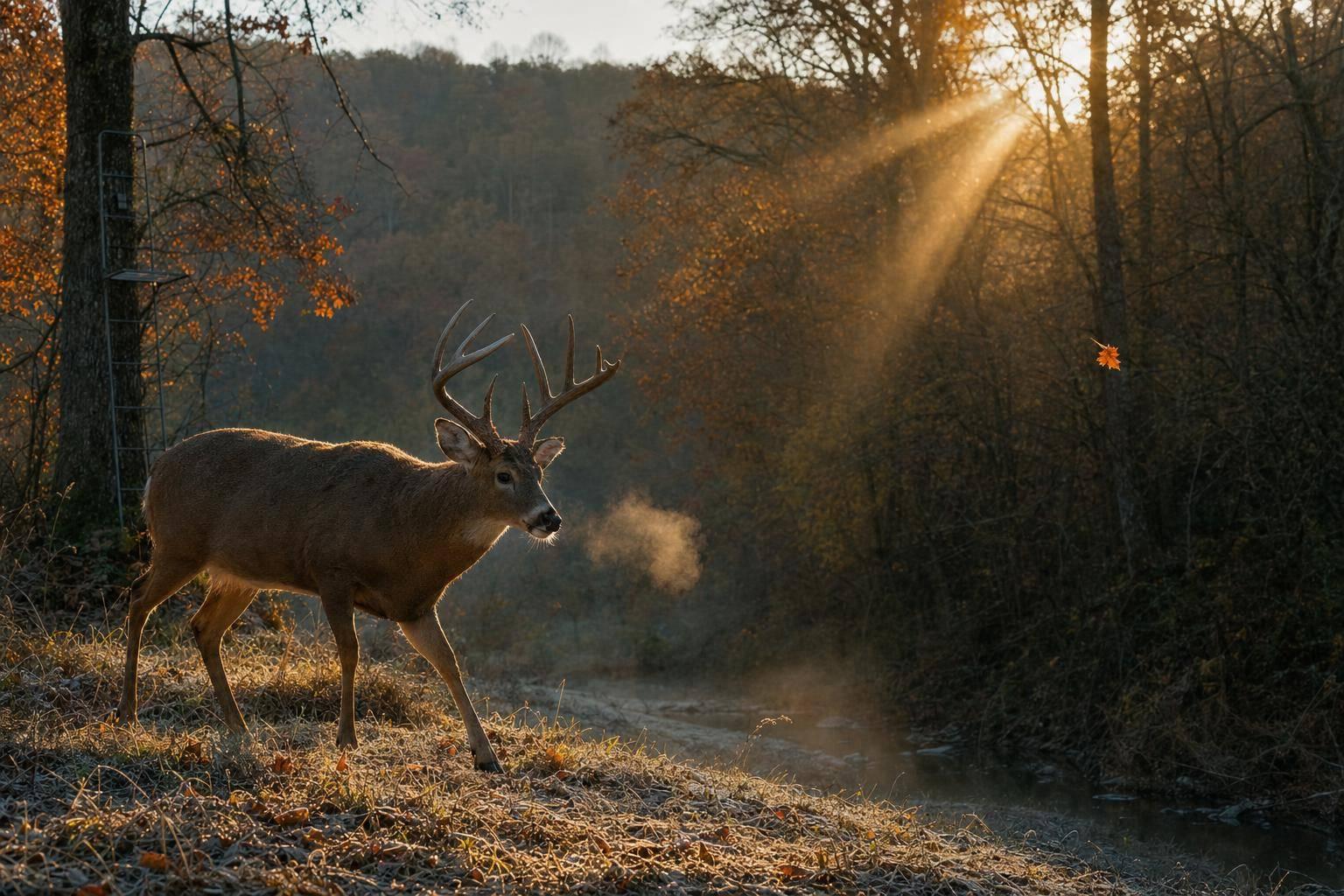
Temperature changes directly influence deer movement. Here’s what you need to know:
- Cooler temperatures increase activity: Deer move more when temperatures range between 20°F and 60°F. A drop from 60°F to 50°F can significantly boost movement.
- Warm weather slows them down: When temperatures rise above 60°F, deer activity decreases, especially during the day.
- Extreme cold keeps them bedded: In temperatures below 10°F–12°F, deer conserve energy by staying in sheltered areas.
- Trends matter more than actual temperatures: Gradual shifts, like a cooling trend or the arrival of a cold front, have a bigger impact on deer behavior than specific temperature readings.
- Best times to hunt: Focus on cooler mornings and evenings, especially after a cold front or rain. During warm weather, evening hunts near water sources are most effective. For personalized advice on timing your trip, you can contact a Kentucky hunting guide to discuss current conditions.
Understanding these patterns helps you plan ultimate whitetail hunts around when deer are most active.
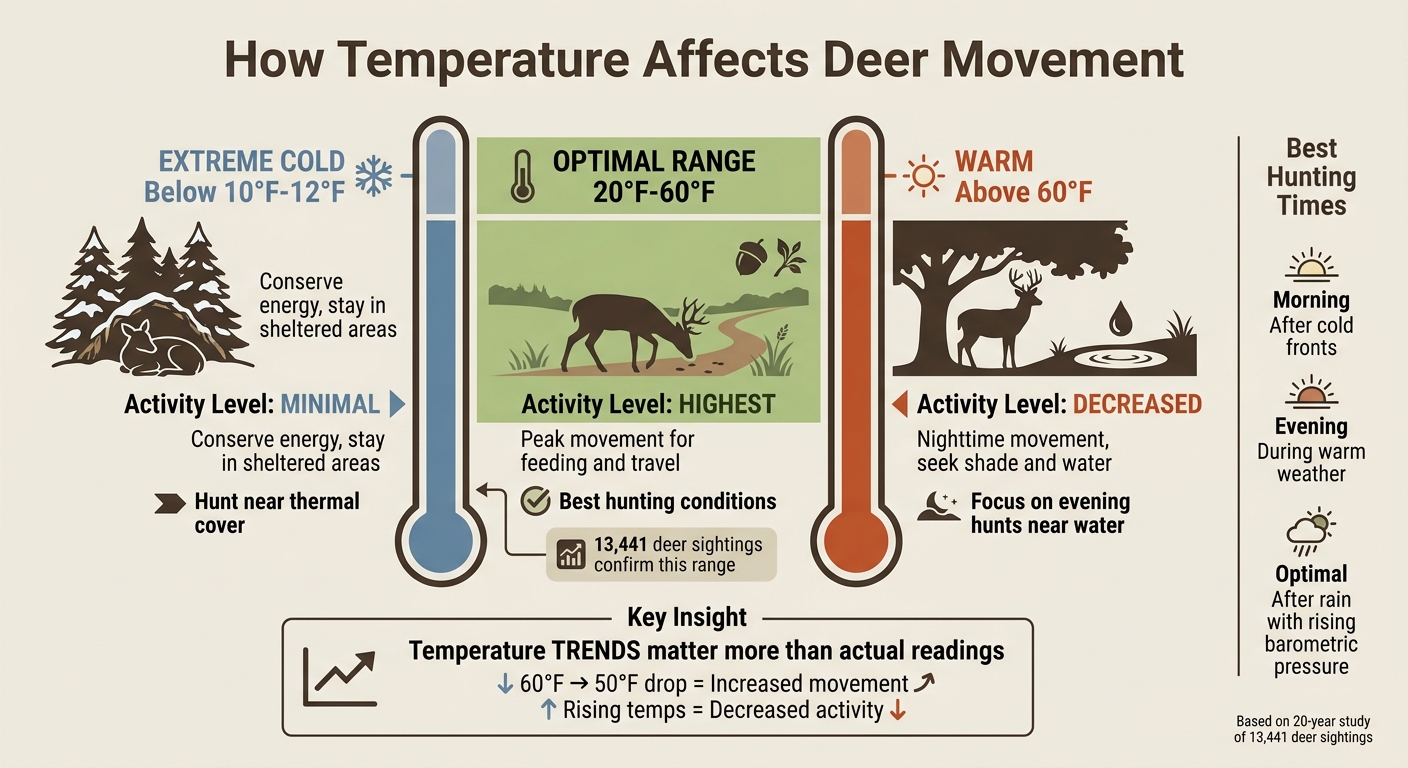
How Temperature Affects Deer Movement: Activity Levels by Temperature Range
This is How Temperature Affects How Much Deer Move: GPS Study
Best Temperature Ranges for Deer Activity
Whitetail deer are most active when temperatures range between 20°F and 60°F. This range allows them to move, feed, and carry out their daily activities without expending excessive energy. A 20-year study of 13,441 deer sightings revealed that while deer remain active throughout this range, their movement significantly decreases when temperatures climb above 60°F. On the other hand, extreme cold – around 10°F to 12°F – often forces deer to bed down to conserve energy and shield themselves from harsh winds. These findings highlight how moderate conditions keep deer on the move.
Why Deer Move More in Moderate Temperatures
Temperatures between 30°F and 60°F provide an ideal balance for deer. At these levels, they can maintain body heat without overexerting themselves. When temperatures stray outside this range, deer adapt their behavior to conserve energy. For instance, during heatwaves, they seek shade to avoid overheating, while in freezing conditions, they stay in sheltered spots to minimize heat loss. Research from South Texas supports this, showing that whitetail deer tend to lie low during extreme cold, waiting for conditions to improve before resuming activity.
How Morning and Evening Temperatures Affect Movement
Daily temperature shifts, especially at dawn and dusk, also play a big role in deer movement. Cooler temperatures during these times naturally prompt feeding and travel. Even a small drop in temperature within the moderate range can lead to a noticeable increase in activity. For example, if daytime highs in the 60s drop into the low 50s, deer tend to move more. Similarly, after prolonged rain, the first few hours of cooler conditions often see a spike in movement. Deer are also more likely to be active during "grungy" weather, such as ground fog, mist, or light drizzles, as long as the temperature stays within their preferred range.
How Warm Temperatures Affect Deer Movement
When temperatures climb above 60°F, deer activity drops significantly. This is largely because deer, still wearing their thick winter coats, tend to move less in warmer conditions. This behavioral shift highlights how heat influences their daily patterns.
Heat Stress and Deer Behavior
Warm weather has a noticeable impact on deer movement. As Scott Bestul, Whitetails Columnist for Field & Stream, explains:
Already clad in their winter coats, most warm-weather bucks restrict their movement to nighttime hours.
During the day, deer often retreat to cooler areas like shaded slopes, dense forest canopies, or wooded corridors. They also gravitate toward water sources such as ponds and springs to stay hydrated. Their daytime activity is typically limited to the final hour before sunset. Recognizing these tendencies can help you plan your guided Kentucky whitetail hunt more effectively when the weather is warm.
When to Hunt During Warm Weather
Evening hunts are your best bet during a heatwave. Bucks usually return to their bedding areas well before sunrise, making morning hunts less fruitful. Instead, focus on the last hour of daylight and position yourself in staging areas between bedding spots and feeding locations. Prioritize areas near water sources, especially those situated between bedding grounds and afternoon feeding zones. Matthew Saganski from HuntWise emphasizes this approach:
A water source on the way to an afternoon feeding source is one of the best spots to hunt in hot weather.
Seek out small, shaded food plots or areas with moisture-rich food options like crab apples, pears, or clover. These spots are often more appealing to deer than dry acorns. Even subtle environmental changes, like a slight breeze or a drop in temperature, can temporarily increase deer activity.
How Cold Fronts and Temperature Drops Affect Deer
When temperatures drop suddenly due to a cold front, deer behavior shifts noticeably. Unlike warm weather, which tends to limit their movement, cooler conditions often lead to a surge in activity. This makes cold fronts a key factor for hunters to monitor.
Why Cold Fronts Increase Deer Movement
Cold fronts influence deer movement by altering air pressure and atmospheric conditions. According to the Outdoor Life Online Editors:
What they [deer] do love is a moving barometer, and a moving barometer is usually accompanied by a northwest wind.
As a cold front moves in, barometric pressure rises, and weather changes like fog, mist, or light drizzle create an environment that encourages deer to move. One of the best opportunities to observe this increased movement is right after a prolonged rain – something often associated with cold fronts. This pattern of heightened activity during natural temperature shifts provides an ideal window for hunters.
How to Hunt During Cold Fronts
Timing is crucial when hunting during a cold front. The hours immediately after rain stops are often the most productive, as deer are more active during this period. Keep an eye on rising barometric pressure and adjust your strategy accordingly.
Morning hunts following an evening storm are particularly effective, especially if the wind shifts to the west or northwest – conditions that tend to drive deer movement. Additionally, hunting during fog or light mist can improve your chances, as these weather conditions often encourage deer to be on the move.
Using trail cameras can also provide valuable insights into deer patterns, helping you pinpoint active feeding areas. Scouting transition zones, such as the paths between bedding and feeding areas or natural funnels like ditches and fence crossings, can further refine your approach and increase your likelihood of success .
How Deer Respond to Temperature Changes by Season
Seasonal temperature changes have a big impact on deer behavior, shaping their daily routines and movement patterns. By understanding these shifts, you can better plan your hunts and anticipate when deer are most likely to be active.
Summer Heat and Nighttime Movement
When summer temperatures rise, deer tend to avoid daytime activity. Research shows that deer significantly reduce movement when temperatures exceed 60°F. However, this threshold varies depending on where they live. For instance, a deer in Minnesota might find 40°F warm, while deer in southern regions are more tolerant of higher temperatures before adjusting their habits. During intense heat, deer conserve their energy by staying in shaded areas during the day and becoming active at night when it’s cooler. For hunters, this means focusing on the coolest parts of the day – early mornings before sunrise or the final moments of evening light.
Fall Rut and Temperature Effects
The fall rut is a unique period when breeding instincts often take precedence over weather conditions. While temperature still influences deer movement, the drive to reproduce can override typical patterns. Research highlights that the time surrounding the peak of the rut sees the highest buck activity, regardless of other factors. However, unusually warm fall temperatures can still dampen daytime movement, potentially pushing more activity into the cooler nighttime hours.
Winter Cold and Energy Conservation
Harsh winter conditions force deer to focus on conserving energy. They seek out sheltered spots, such as the lee side of ridges or dense cover, to shield themselves from biting winds. Deer are also known to increase movement just before major snowstorms and resume feeding as the storm clears. Deer habitat expert Jeff Sturgis explains:
In a heavy blizzard with lots of wind and dropping temperatures, deer know enough to stay out of those conditions. So, hunting on the backside of snow (or before a big snow) can be an excellent time to get out and see lots of deer moving around.
How to Adjust Your Hunting Strategy Based on Temperature
Understanding how temperature influences deer movement can help you fine-tune your hunting approach for better results.
Using Weather Forecasts to Plan Your Hunt
Weather trends, not just the day’s high or low, play a key role in deer activity. For example, a temperature drop from 60°F to 50°F can spark movement, even if 50°F might feel warm for the season. In contrast, rising temperatures tend to slow deer activity.
Keep an eye on barometric pressure as well. A rising barometer after a storm often signals prime hunting opportunities. Use hourly forecasts to identify short breaks in weather, like a pause after rain or snow, when deer are likely to feed. Position your stand along the backside of a cold front or just after snowfall, as these are times when deer are more likely to be on the move.
Armed with weather insights, adjust your hunting locations to align with where deer are expected to be most active.
Finding Deer Based on Temperature Conditions
Deer behavior changes with temperature, which can help you decide where to focus your efforts. In warm weather (above 60°F), deer often retreat to thick bedding areas near water sources. During the coolest parts of the day – early morning or just before dusk – concentrate on shaded areas near creeks or ponds.
When cold fronts roll in, shift your focus to food sources like crop fields or oak stands, which tend to draw deer during colder weather. On windy days, common with cold fronts, use topographic maps to locate calmer spots like the lee side of ridges, where deer seek shelter from the wind. In extreme cold (below 10°F–12°F), deer may conserve energy by bedding down in thermal cover. Hunting near these sheltered areas can increase your chances of success.
Local knowledge can further enhance these strategies, helping you adapt to the specific conditions of your hunting area.
Guided Hunts in Northeastern Kentucky
For hunters seeking expert guidance, Whitetail Hunting Kentucky offers tailored strategies based on real-time temperature conditions. Their guides carefully monitor regional weather patterns and temperature shifts to plan hunts that align with deer activity. Whether you’re hunting in the heat of the early Velvet Bow Hunt or during the peak rut of Rifle Season, their team ensures you’re positioned where deer are most likely to move. With access to well-managed properties and strategically placed stands that account for wind direction and temperature-driven behavior, you can focus on the hunt while they handle the planning.
Conclusion
Temperature has a big impact on whitetail deer movement, but it’s the trends that matter more than any single reading. For example, a drop from 60°F to 50°F can spark activity, even if 50°F doesn’t feel particularly cold. On the flip side, rising temperatures often slow deer movement. Knowing how deer react to extreme cold – seeking cover – or high heat – retreating to shaded areas – can give you a strategic edge.
Use this knowledge to adjust your approach. Pair accurate weather tracking with barometric pressure monitoring and smart map use to identify the best hunting opportunities. Keeping a hunting log can help you spot local patterns, while topographic maps can lead you to calm spots during windy conditions or shaded bedding areas when it’s warm. As Jeff Sturgis, a deer habitat and movement expert, puts it:
The temperatures leading up to that end temperature are really the story.
If you’re planning a hunting trip to Northeastern Kentucky, expert guidance can be a game-changer. The team at Whitetail Hunting Kentucky keeps a close eye on regional weather patterns and adjusts their strategies in real time. Whether it’s early-season hunts or peak-season outings, their guides ensure you’re positioned where deer are most likely to move. By combining professional insights with your own weather awareness, you’ll be well-prepared for success.
While temperature is a key factor in understanding deer behavior, proper preparation and local expertise will help you adapt to whatever the season throws your way.
FAQs
Is temperature or barometric pressure a better predictor of deer movement?
Cooler temperatures play a key role in predicting deer movement, particularly for bucks. When the temperature drops, bucks are more likely to move during daylight hours. On the other hand, barometric pressure doesn’t seem to have much influence on their activity, according to the information available.
How do I adjust stand locations during a sudden warm-up or cool-down?
When the temperature spikes, deer tend to retreat to shaded spots or denser cover to stay cool. This is a great time to think about relocating your stand to those areas. On the other hand, when the weather cools down, deer often become more active, venturing into open fields or along trails that lead to their bedding spots. Pay close attention to these weather changes, stay adaptable, and adjust your stand placement to match the shifts in deer movement.
Does the rut override temperature effects on buck movement?
During the rut, deer activity tends to spike, especially for bucks. However, temperature remains a key factor in their movement patterns. While bucks may roam more freely during this period, regardless of the weather, shifts in temperature can still impact their behavior. Hunters should take both the rut and weather conditions into account when crafting their game plan.